Riverside - Boat Building

Robinson's Boat Yard

Shipbuilding at Woodbridge could not be killed off by the railway. The 1881 Ordnance Survey map shows that a new shipyard had been constructed on the water front just below the old shipyard. The new shipyard yard was probably the inspiration of the boat builder William Garrard in about 1860. It was taken over by Ebenezer Robinson in 1884 He laid the foundations for Woodbridge’s yacht building industry and Ebenezer’s son, A V ‘Robie’ Robertson, gradually expanded the business.

By the early part of the twentieth century and the yard became well known for its barge yachts. The flat bottoms of these yachts enabled them to sit on the ubiquitous mud of our coast at low tide, but their performance in other respects could not match yachts with keels so Robinsons eventually switched to this type of construction before the 1914-18 war.

The yard produced a number of very successful boats during the 1960s and 70s, and in 1992 its 28-foot cruising yacht won the accolade of ‘Best boat of the show’ at the Plymouth Boat Show.

By 2005 repair and refitting had become the main activity of the Robertson’s yard. Around 70% of the work being on wooden boats, most of which came from the Suffolk and Essex rivers, but some regular jobs came from as far away as the Channel Islands and the Isle of Man.

Since 2018 the yard is no longer owned by a Robertson but it is still a family owned business. In recent years there has been a significant investment in most areas. The main buildings have been refurbished and machinery and lifting equipment has either been replaced or upgraded. Improvements were also made to sewage treatment facilities and specialist training has been given to new staff members.

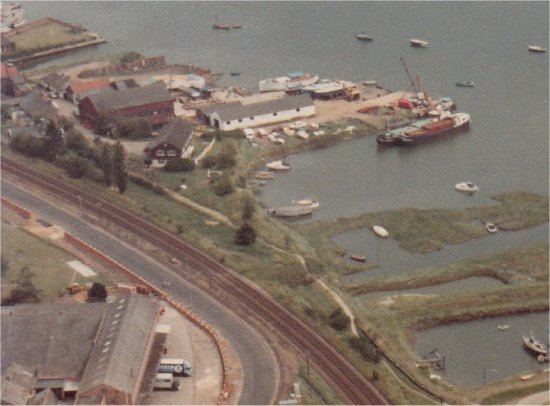
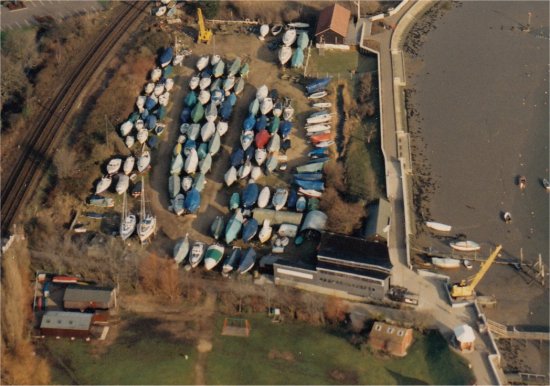
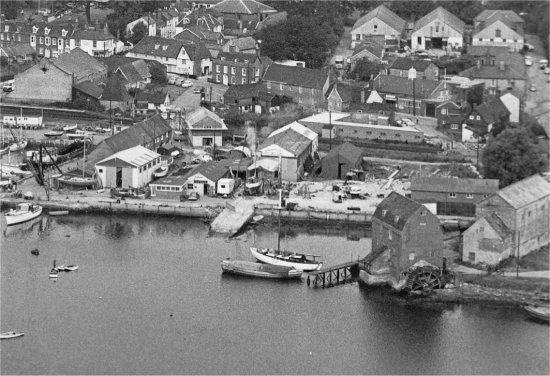
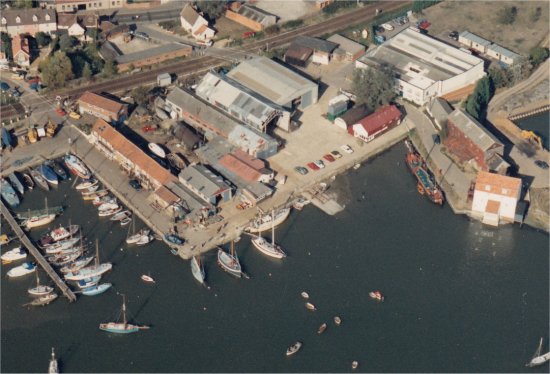
Aerial view of the boatyard in 1980.
Robertson’s are still keeping to its tradition of working with wooden craft but it has diversified by introducing new services such as rigging and composite deck replacements. They have also reclaimed over an acre of land to provide more boat storage space, fully serviced with electricity and water supplies. An old dilapidated office/storage building has been replaced with an award winning modern building housing two commercial office units and a stunning three-bedroom holiday apartment with views over the yard and river. Income from this building helps weather the peaks and troughs of the core boatyard business.

Everson's Boat Yard

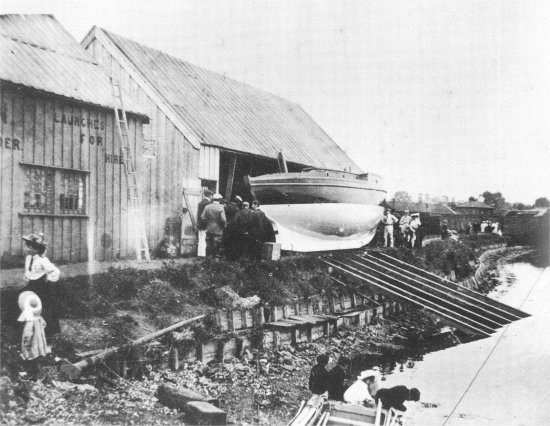
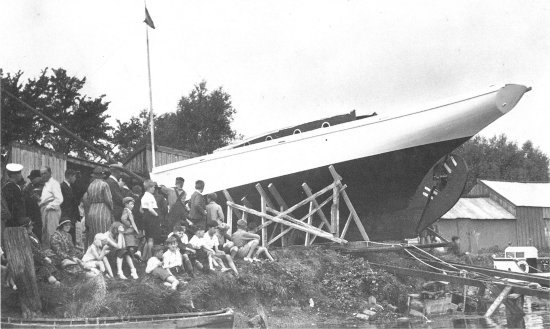
Ebenezer Robertson hoped that his son-in-law Alfred Everson would join his son Robbie at the Lime Kiln Quay boat yard but there was ill feeling between the pair. Undaunted Ebenezer, who owned the coal yard at the end of the Avenue, started Everson’s boat yard there in 1889. This yard became well known for building 12ft clinker dinghies and the 3-ton Cherub, a cabin yacht for estuary cruising. The photograph below show a vessel being launched in about 1900 (right) and another in 1934 (left). In 1912, when Alfred was fifty years old, his yard was destroyed by fire. The yards were rebuilt as the Phoenix works. The 1939-45 war brought contracts from the Royal Navy to build craft which could use to paint their ships. Enough material was ‘liberated’ from this project to produce a prototype sailing dinghy, Beaver 1, and then a second version Red Beet which became the first of the 14ft Kingfisher class. A total of 29 Kingfisher dinghies were produced between 1943 and 1963 and several examples of the both Cherub and Kingfisher classes on the Deben today. They are still looked after by the yard that built them. In addition to these craft there has been a regular production of small rowing and sailing dinghies.

Ebenezer Robertson hoped that his son-in-law Alfred Everson would join his son Robbie at the Lime Kiln Quay boat yard but there was ill feeling between the pair. Undaunted Ebenezer, who owned the coal yard at the end of the Avenue, started Everson’s boat yaIn 1989 the yard passed from the Everson family to Peter Derby who had great interest in steam power with his yacht Mrya. A number of yachts were fitted out in the yard using mouldings and equipment from the Pegasus Yacht Company. In the 1980s the business passed to Frank Knights and, in 2001, it was taken over by a small group of local yachtsmen who continued the tradition of individual care for many traditional and modern yachts. The group also provided moorings, winter storage, maintenance and repair.

From 2010 the name of the business was changed to The Woodbridge Boatyard Ltd to make it easier to find on the internet.ard there in 1889. This yard became well known for building 12ft clinker dinghies and the 3-ton Cherub, a cabin yacht for estuary cruising. The photograph below show a vessel being launched in about 1900 (right) and another in 1934 (left).

In 1912, when Alfred was fifty years old, his yard was destroyed by fire. The yards were rebuilt as the Phoenix works.

The 1939-45 war brought contracts from the Royal Navy to build craft which could use to paint their ships. Enough material was ‘liberated’ from this project to produce a prototype sailing dinghy, Beaver 1, and then a second version Red Beet which became the first of the 14ft Kingfisher class. A total of 29 Kingfisher dinghies were produced between 1943 and 1963 and several examples of the both Cherub and Kingfisher classes on the Deben today. They are still looked after by the yard that built them. In addition to these craft there has been a regular production of small rowing and sailing dinghies.

Aerial view of the boatyard in 1980.

Whisstocks Boat Yard

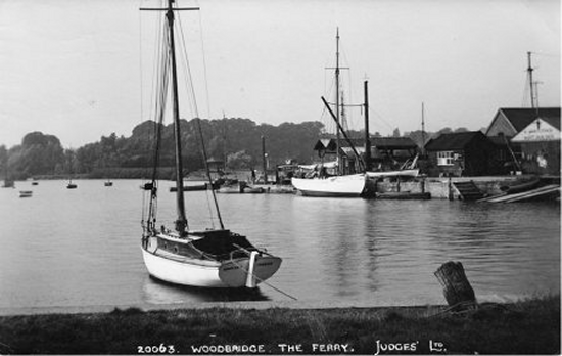
In 1926 Claude Whisstock purchased the marsh, between the Ferry Quay and the Tide Mill. Soon after, he built a boatyard there on stilts.

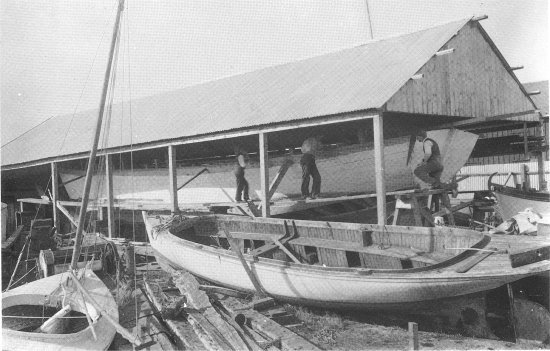
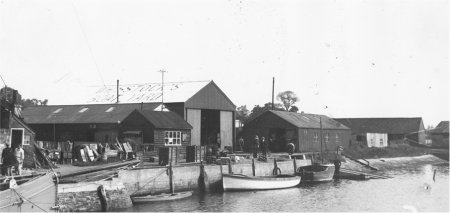
The earliest photograph of Whisstock’s boat yard is shown on here.

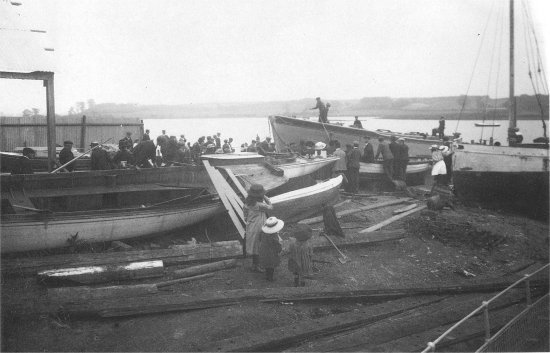
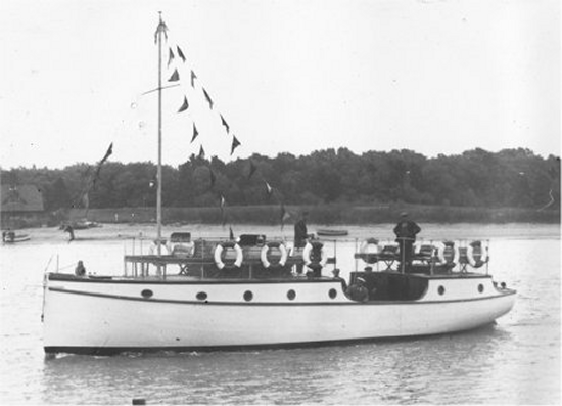
A slightly later photograph, taken from the other end of the causeway, is shown on the right. The photograph shows the launching of the Orwell Viking in about 1926, It was a 40ft passenger launch which was used for pleasure trips on the River Orwell. To the right of it is a photograph of the craft after it had been fitted out. Her sister ship, the Deben Viking, was also built at the yard.

This photograph show the launching of the Orwell Viking in about 1926, It was a 40ft passenger launch which was used for pleasure trips on the River Orwell. To the right of it is a photograph of the craft after it had been fitted out. Her sister ship, the Deben Viking, was also built at the yard.
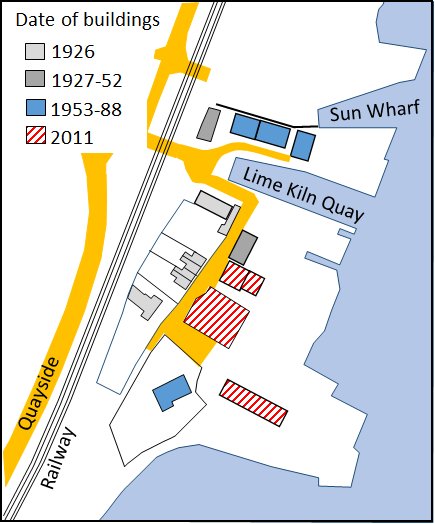
By the time Claude Whisstock business expanded his all the new buildings and storage areas had concrete foundations and the yard was as shown by the photograph on the right.
Whisstock’s boatyard flourished and it became the best known yard in Suffolk. It produced a range of wooden, fibreglass and aluminium hulled craft and established a national reputation.

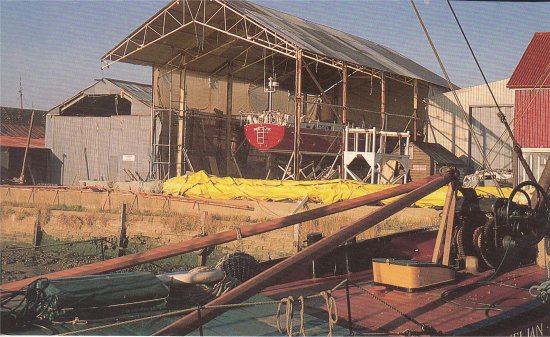
After the Whisstock family sold the yard in 1984 the business soon went into receivership. It managed to start up again only to close finally in 1990. After several attempts to redevelop the site planning permission it became clear that the boat shed was deteriorating rapidly.

Eventually planning permission was given for mixture of residential and commercial developments, a community boat shed and a community heritage building. The latter, which is now the home of Woodbridge Museum, is on the site of Whisstock’s first boat shed.

When Claude Whisstock walk out of the boatyard to start a new life in the USA the walls of his office will still decorated with photographs of the last series of boats that he had designed and built.