Home > Street and River Photography > Market Hill
Market Hill
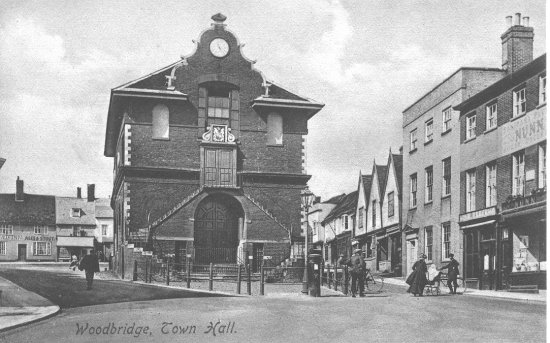
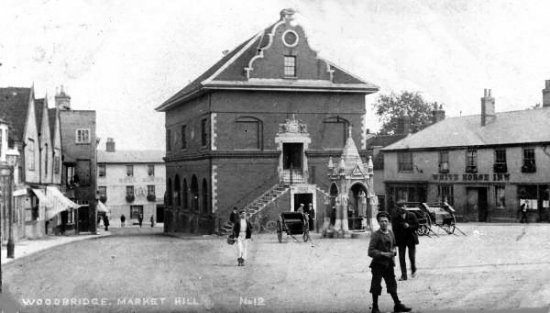
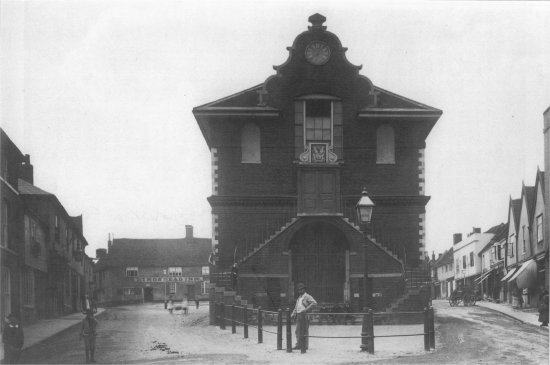
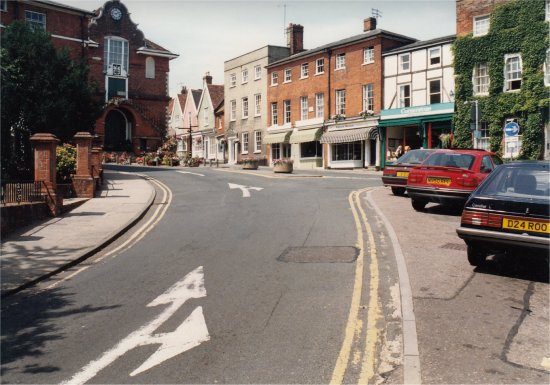
When entering Market Hill from Church Street the first building that draws your attention is the imposing Shire Hall. It was commissioned by Thomas Seckford, a senior legal officer, who accompanied Elizabeth I on her progresses around the country. It is thus not surprising that he was made Steward of the Liberty of St Etheldreda. This Liberty was part of Suffolk where the legal system was controlled by Ely Abbey.
When Ely Abbey was dissolved in 1539 the legal system of its Liberty was incorporated into the national one but it continued to have its own quarter sessions, coroner and gaol. The quarter sessions had been held at a number of places but when Thomas Seckford was appointed Steward he decided they should always be held at Woodbridge. To this end, in 1575, he arranged for the erection of the building variously known as the Sessions House, Shire Hall or Town Hall, in the Market Place. The upper floor was used for Quarter Sessions of the Liberty of St Etheldreda while the lower part, which then had open arches rather than windows, was used as a covered market. Other market stalls and animal pens continued to be laid out around the rest of the Market Place. The Liberty’s gaol remained in Melton.
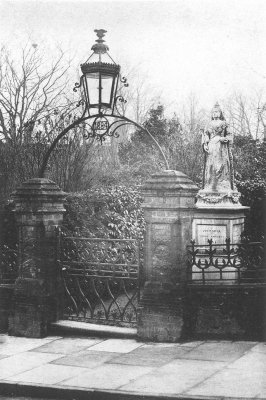
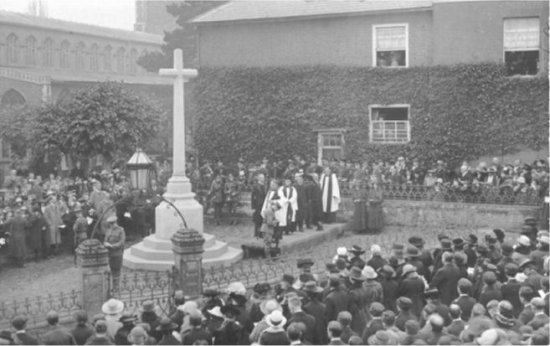
Two years later a statue of Queen Victoria was placed in the garden to celebrate her Golden Jubilee. After the First World War the small garden around the statue was seen as the obvious place to erect a memorial in memory of those men who made the supreme sacrifice for King and country. The statue of Queen Victoria was relocated to the lower corner of the garden to make way for the Memorial which was dedicated on 11th November 1920.
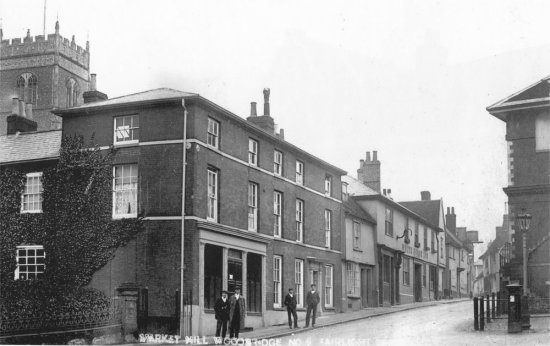
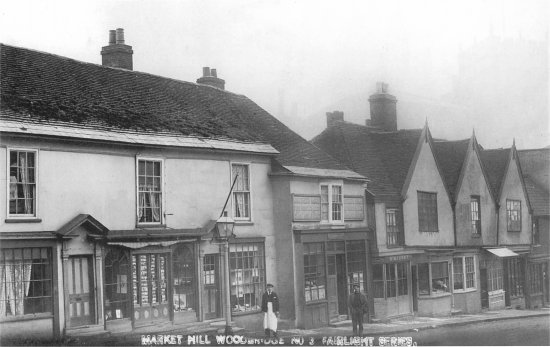
This photograph, taken in 1904, shows the buildings along the southern side of Market Hill. A large section of the three storey building in the foreground of this photograph was timber framed.
The small timber framed building in of the middle of the photograph was once the home of Isaac Johnson who had considerable talents as a surveyor, artist and antiquarian draughtsman. Beyond this house there were two large public houses. They were The White House Inn and The Kings Head.
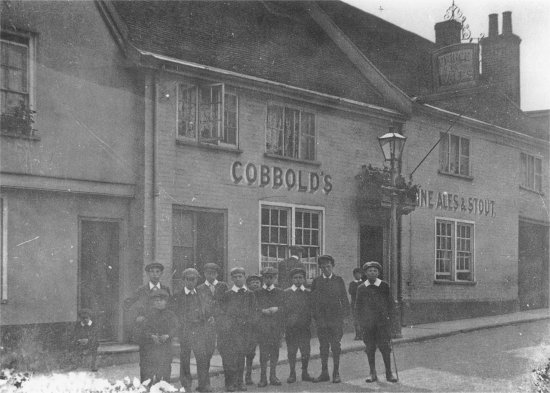
The White House Inn is just left of centre in this photograph.
This circa 1900 photograph shows the White House Inn in greater detail. It was taken from the north-eastern corner of the Market Place.
By the time this photograph was taken in 1900 The Kings Head had become The Prince of Wales. It is now a private residence.
The only other building on Market Hill to have been demolished was near the entrance to Seckford Street. When this photograph was taken in about 1900 only the outer walls of the building remained standing. The windows and doorways had been bricked up, presumably to create an enclosed courtyard.
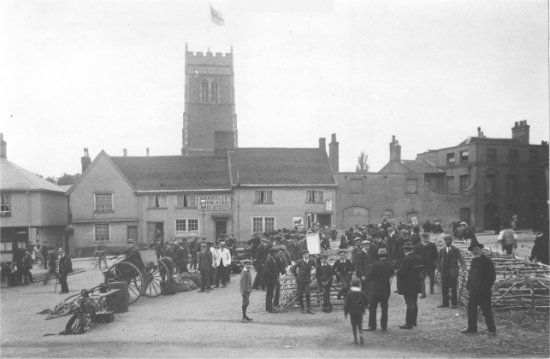
The photograph was taken on market day.
This photograph, taken in 1918 on Armistice Day, shows the partly demolished building in greater detail.
By the time this photograph was taken the partly demolished building had been taken away and the adjoining house had been enlarged and a double garage had been built.
The double garage was set back from the road by a courtyard. When desired, two large wooden doors can be closed to block the entrance to the courtyard.
This1900 photograph shows the Kings Head Inn on the eastern end of Market Hill. Sadly there are no other old photographs showing the other buildings on eastern end of Market Hill.
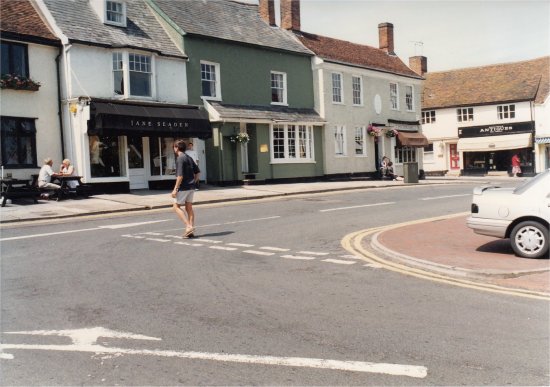
The buildings in this 2010 photograph have probably not changed significantly since 1840. There has, however, been a recent change to a courtyard behind the green building. Within the courtyard there is now an attractively designed building which reached via a narrow passageway along the left side of the green building.
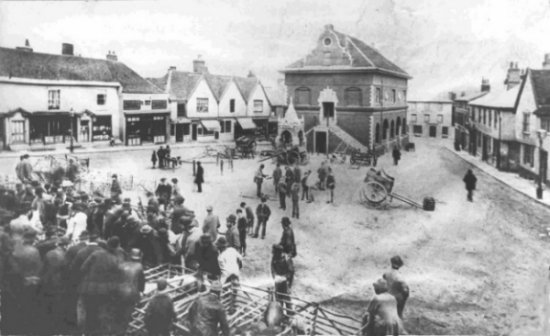
This photograph shows the weekly market in about 1900.
By about 1800, and possibly earlier, the lord of the manor of Woodbridge late Priory had ceased to exercise his market rights. Although the market was still taking place weekly he was no longer erecting stalls on the Market Place and collecting a tax on the goods sold. In 1803 the open arches in the lower part of the Shire Hall were partly bricked up and windows were installed. The space created was used as a corn exchange which was run by the ‘Corn Market Committee’. By 1830 the market was described as being “an extensive one for corn and cattle”. By then the retail needs of the townspeople were clearly being met by shops rather than market stalls.
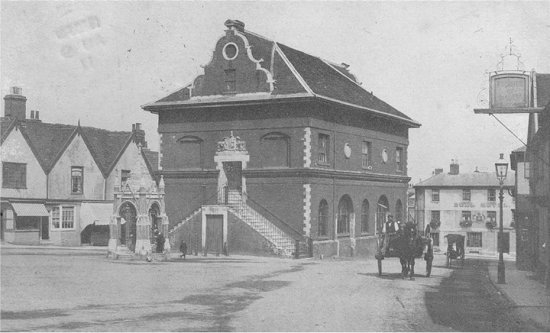
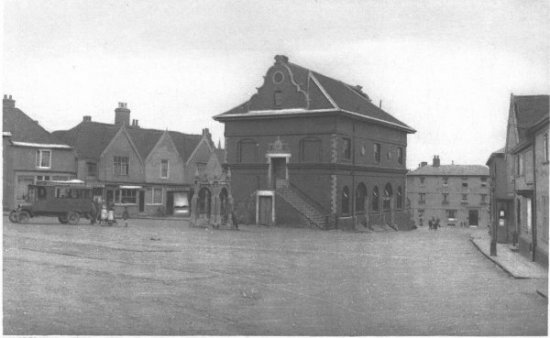
The Shire Hall and the Market Place in about 1911. The public pump and drinking fountain was erected by the Seckford Foundation erected in 1877 for the “use and convenience of the poor inhabitants of the town and neighbourhood”. The fountain had “a trough filled with water, for the comfort and convenience of dogs, horses and cattle passing through the town”.
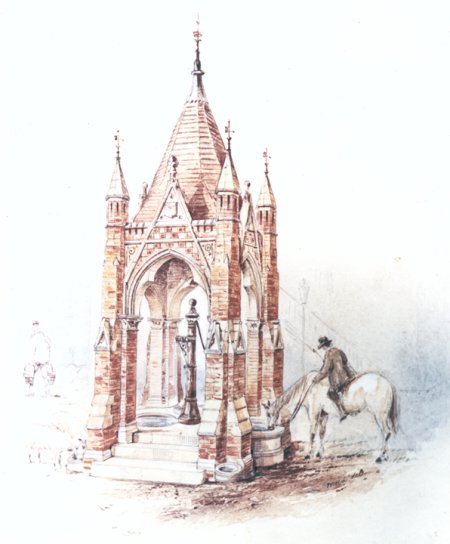
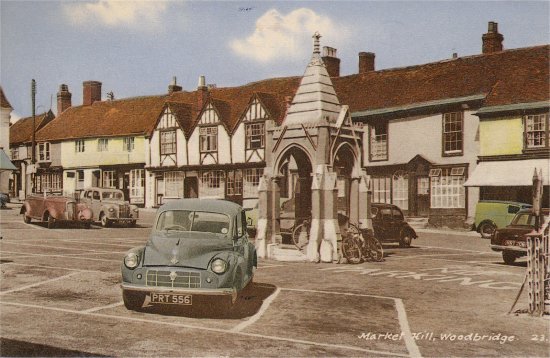
Seckford Foundation held a competition to design the public pump and drinking fountain. It was won by William Henry Lockwood who submitted the design for the pump and drinking fountain which now adorns the Market Hill. He called the design ‘Victoria’ because it resembled the headdresses worn by the Queen.
In April 1896 the Woodbridge Urban District Council purchased the market rights and then started to offer yearly leases to run the market.
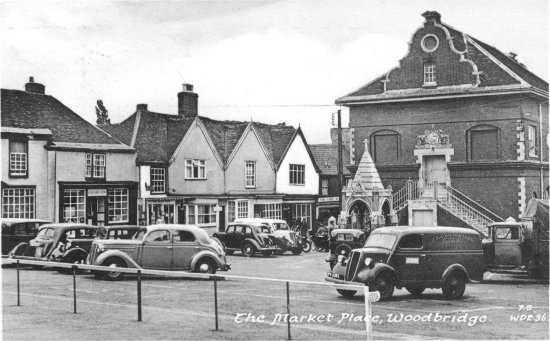
The income generated by the leases gradually diminished and, in 1936, the Council decided that there was insufficient demand for the market. In the same year the Council turned that part of the Market Hill, west of the Shire Hall, into a public parking space. The whole area remained open but the parking spaces were marked out by white lines.
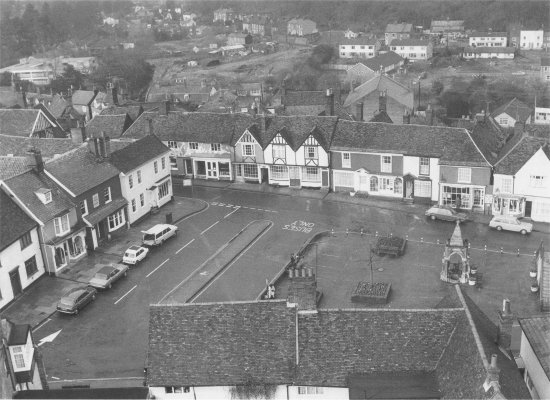
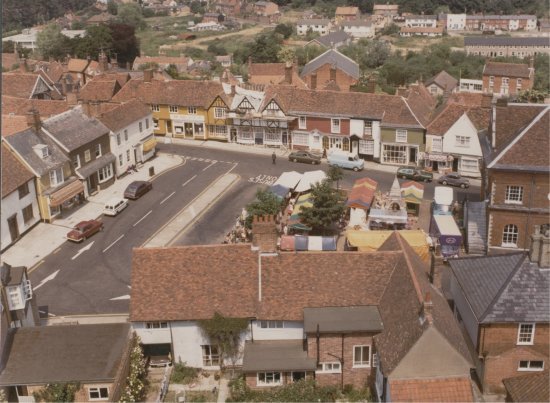
During the early 1970s the pedestrian area had been enhanced by adding three raised flower beds, each having a tree in their centre, and the western edge of the area was made into a bus lane. Between the bus lane and the Shire Hall there was a large area for the weekly market and other activities.
This photograph shows Woodbridge Market in 1985. The bus lane is to the left of the colourful market stalls.
For many years the market was a thriving concern with standing being available for up to about 15 traders. By 2002, the number of regular traders had fallen to 5 and they successfully lobbied the Town Council to allow them to move down to the Turban Centre.
The bus lane was eventually used for parking spaces when, as part of the Town Council’s renovation of the Shire Hall in 2004, pavers were laid over the whole area.
Since 2010 Market Trading on has returned to Market Hill.
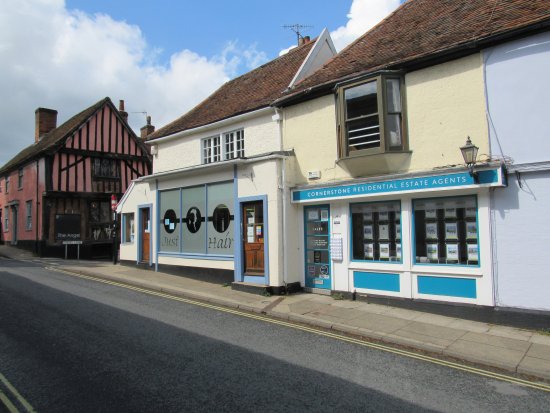
The Angel Inn, the timber framed building on the left of this photograph, abuts Angel Lane. The buildings to the right of Angel Lane are on Market Hill.
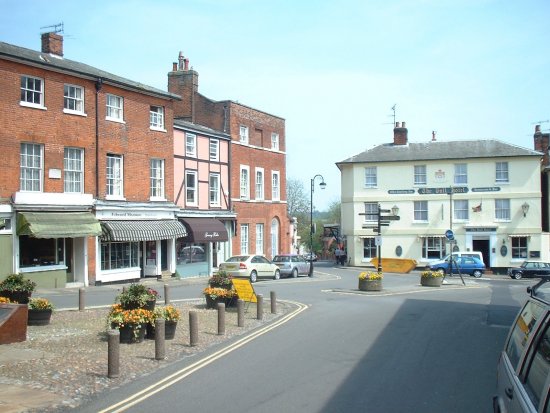
In 1840 the density of housing and commercial premises on the north-eastern side of Market Hill was significantly greater than for any other parts of part of Market Hill and it still is.
In 1840 the building which is now Just Hair was a shop, and the Cornerstone Residential Estate Agents was a bake office, a place were townspeople brought items they wanted cooked.
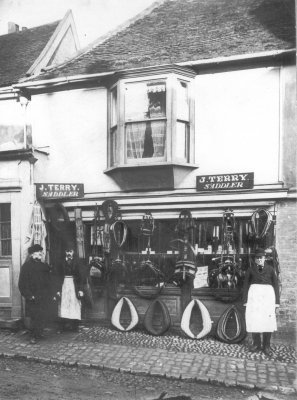
By 1888 the former bake office was occupied by J. Terry who was a Saddler. A photograph of his premises is shown here.
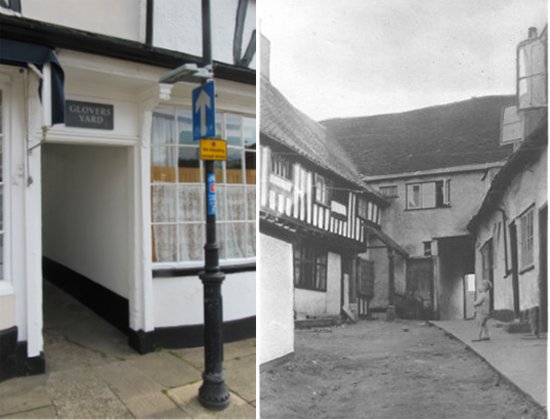
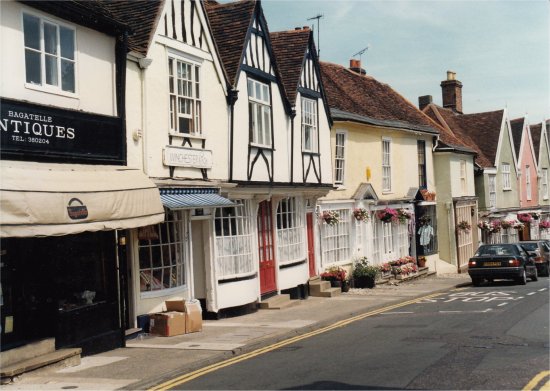
For many years the timber framed building on the left of this photograph was a house and a shop. It also has feature which many passers by ignore. It is a narrow passageway leading to Glovers Yard where where glove makers once worked and lived.
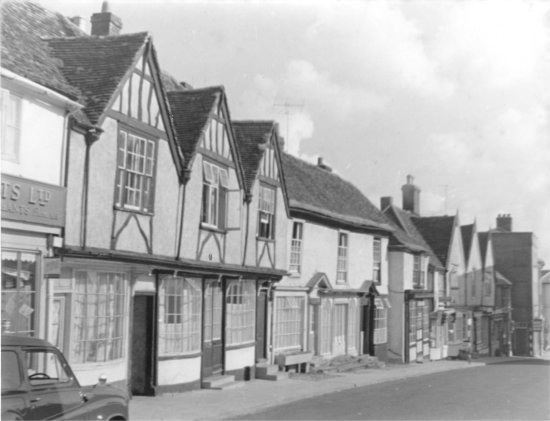
The entrance to Glovers Yard is shown here along with a photograph of the yard in 1950. The part of the yard shown in the 1950 photograph is at the tip of a triangle of land which extends down to a large house which partly abuts what used to be the Beaumont Chapel.
The houses forming the tip of the triangle are all timber framed.
.
By 1960 a terrace of three houses had been built along the eastern side of the triangle of land and there was a wall along the western side.
The only access to Glovers Yard is via the narrow passage way on Market Hill.
This photograph was taken in 2021. It is shown here to emphasise how the wide range of colour washes used the buildings around on Market Hill creates harmony.
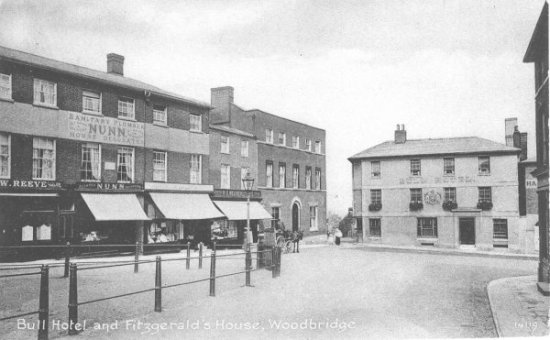
The photograph shows the north-eastern corner of Market Hill in about 1911.
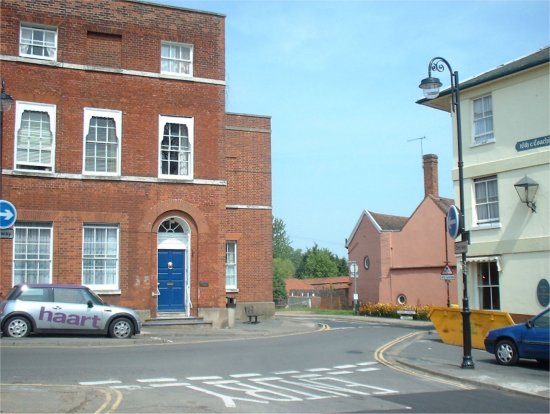
The north-eastern corner of the Market Hill was changed in the 1970s to widen the access into New Street. The widening was accomplished by recessing part of the front of the building abutting Chapel Street. This house named ‘The Old Court House’ had for a time been used for the officers of the court held in the Shire Hall. The last officer to use part of the building was the Coroner of Liberty of St Etheldreda. He had an office there until 1933.
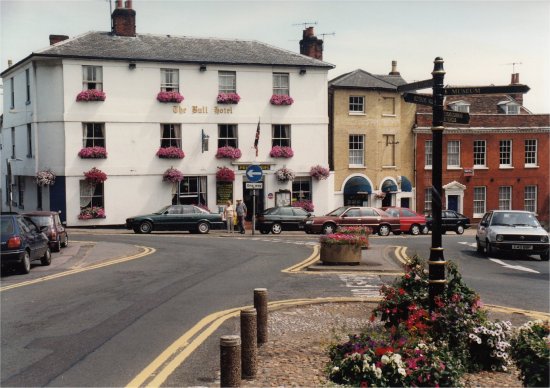
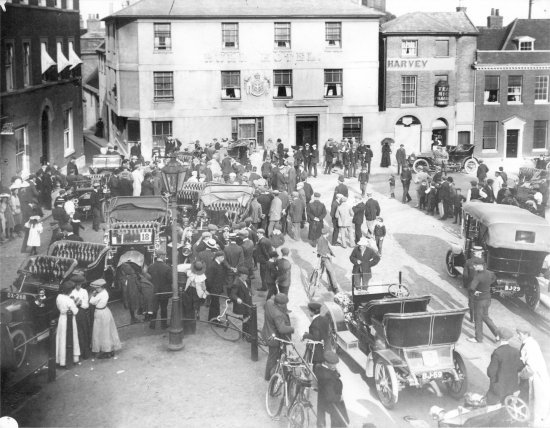
The Bull Hotel in 2018.
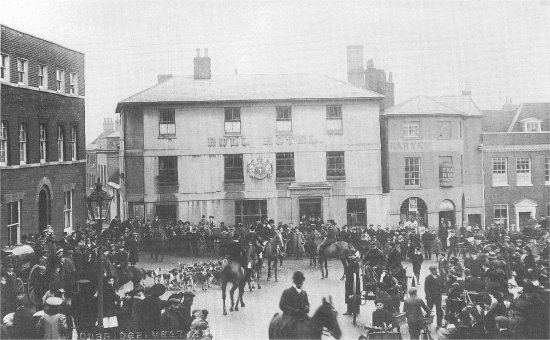
This 1909 photograph shows the East Suffolk Harriers meeting before the hunt to take the stirrup cup.
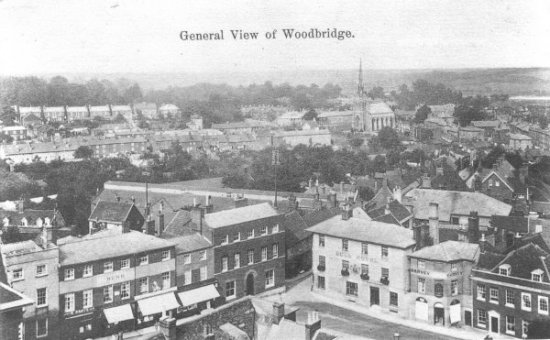
General view of Woodbridge.