Quayside

The Ship Inn which is believed to be the second oldest public house in Woodbridge. In 1586 it was initially called The Quay. The Ship Inn closed in 1910 and is now a private residence.
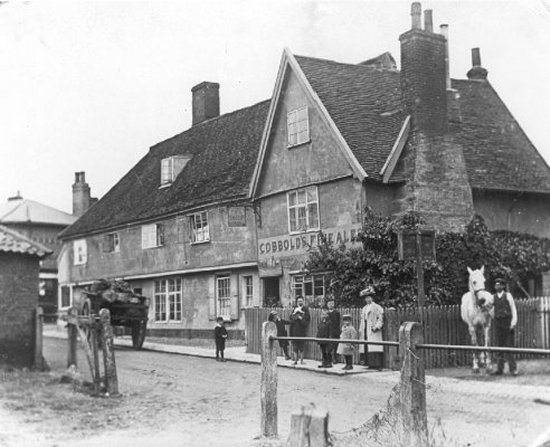
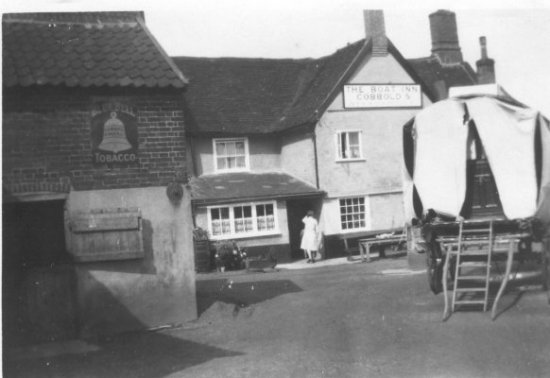
The Boat Inn closed in 1957 and is now a private residence. Their is some confusion about when the Boat Inn opened.

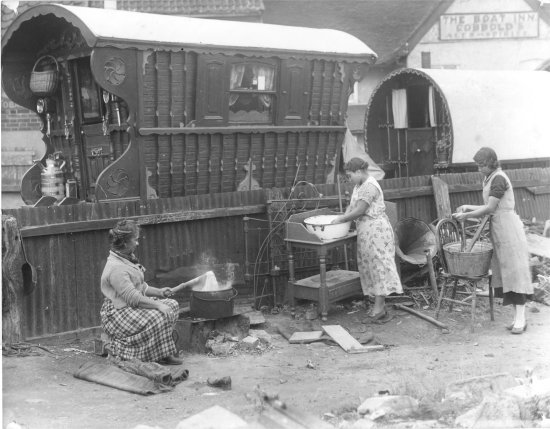
The Gypsy Caravan was a feature of the Boat Inn for many years

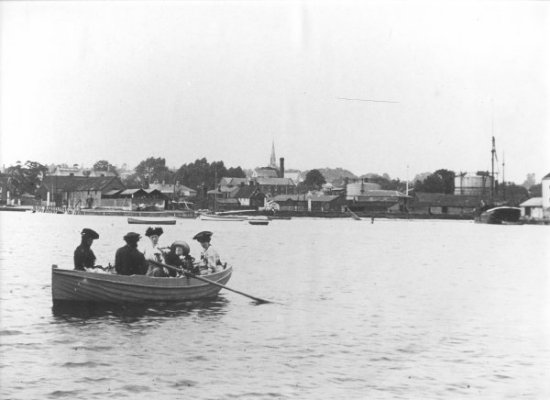
In the late Victorian era the ferry was a vital link in preserving the respectability of Woodbridge residents. The male population were allowed to swim on the Sutton side of the river where a sandy beach then existed below the Sutton Ferry Cliff. The ladies were provided for by the Lime Kiln Quay Swimming baths that had been made simply by walling up one of the docks. They could also swim behind the Tide Mill where there was a caravan in which they could change into their bathing costumes.

The rights of the ferry were given to Woodbridge Urban District Council by the Cobbold family in 1919 and the demand for the ferry was such that’ right up to Second World War, the ferryman paid for the privilege to operate it. After the war it became a service supported by a grant from the Council. Frank Knights ran the ferry from 1947. He recalls that the service started at 7.00 am and finished at 9.00 pm. It was used to take the postman on two return trips a day; to take children from the Sutton side to school in Woodbridge, and to carry almost anyone else (Sutton residents and tourists) on request. Fares were two old pence single, and three old pence return.

In 1950 the Urban District Council announced that they were going to stop the ferry but they were prevented from doing so by a High Court Action brought by H R Pelly of Little Haddon Hall. The ferry continued until 1974 when the new Suffolk Coastal District Council stopped paying for it. The ferry stopped because so few people wanted to cross the river, but the Sutton Hoo Society arranged for a new ferry service on summer weekends during the excavations of 1983 to 1991. Sadly, since the National Trust took over running the site in 2002, the ferry service ended.

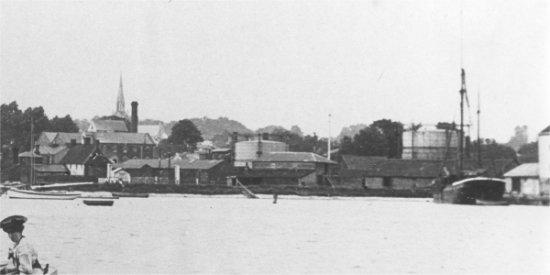
This is an earlier photograph showing the route of the ferry at high tide.

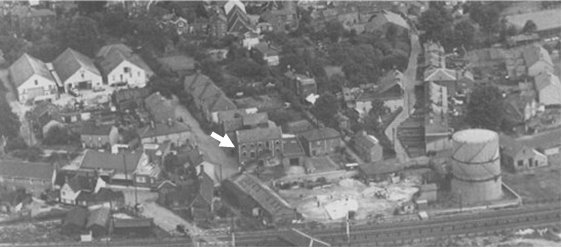
The white arrow on the photograph to the left marks the location of the steam mill on Quayside.

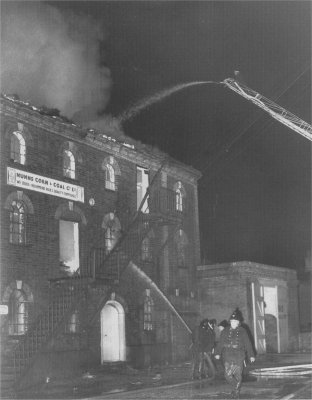
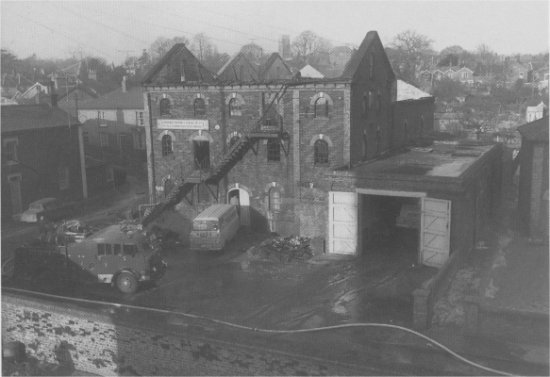
The steam mill operated until about 1928 after which it became a door factory. In 1953 Nunn’s Corn and Coal bought the building which was eventually destroyed by fire in 1963.

The photograph on the right was taken two days after the fire.

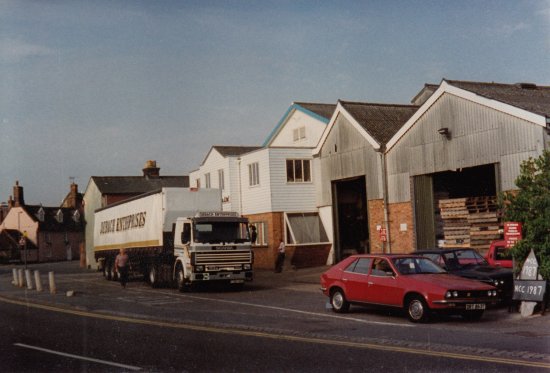
The remains of the former mill, and of two adjacent cottages, were soon demolished and a new mill was built on the site. Nunn’s operated this mill until 1990.

For a while the building was used as a temporary store but then, as this photograph shows, it was left to deteriorate.

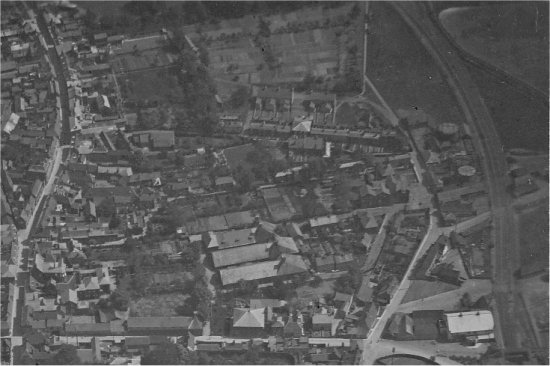
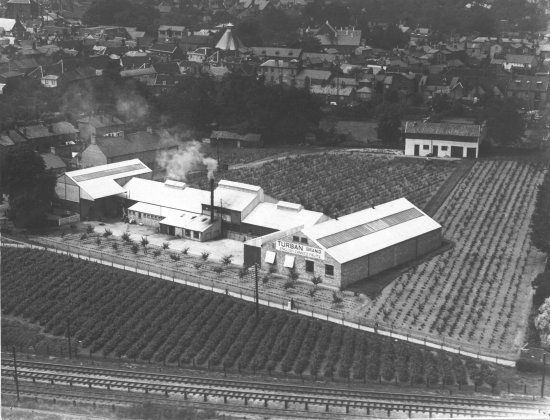
This aerial photograph of Hamlin Gardens shows that most of the area was being used to grow vegetables.

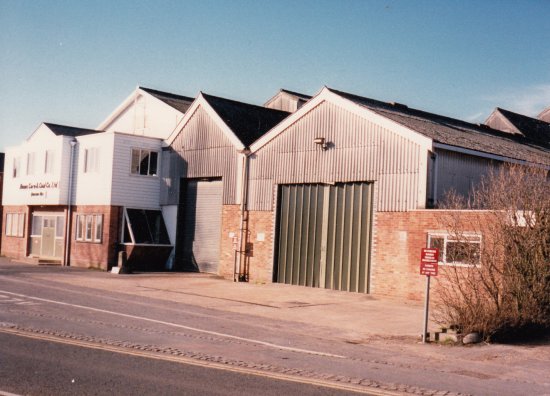
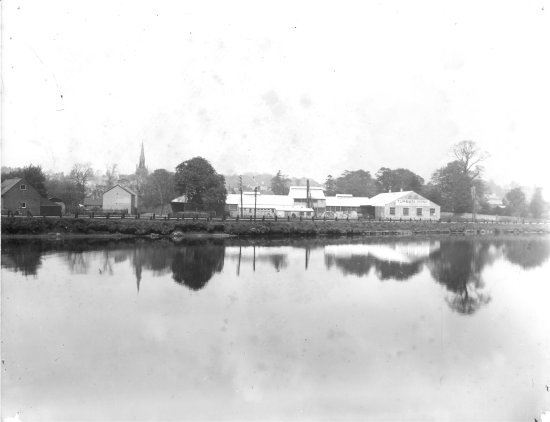
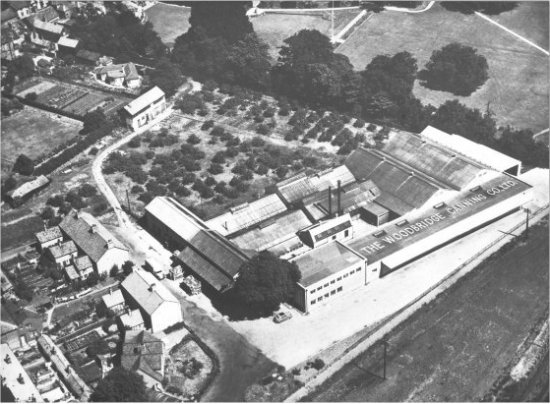
By 1933 a group of local businessmen had built a canning factory on part Hamlin Gardens to bring employment to the town. This was the result of an initiative, by three local people, to provide much needed employment in the town. They started in 1930 with a jam factory at the top of Angel Lane ad spice packing at Sun Wharf. They then sold out to a London dried fruit importer who was prepared to take over the concern and expand it. The London Company built the canning factory in 1933 and increased its size several times during the next 44 years. They initially operated under the name of Woodbridge Canning Company, fruit and vegetable canners. They then operated as Turban Brand – English canned fruits. A wide variety of produce was canned including peas, parsnips, carrots, bake beans and even pigs tails for the ethnic market. They also packed dried fruits, such as dates, and had a contract with the War Office. Seasonal employment was provided, for a mainly female workforce.

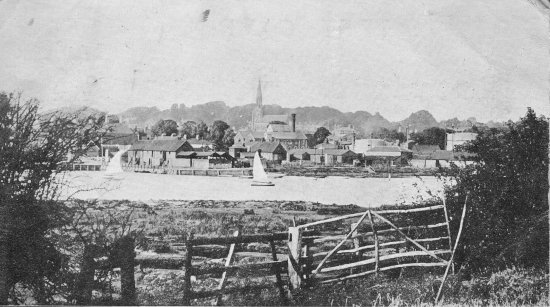
The view from across the river.

This photograph shows the final expansion of the Woodbridge Canning Company in the 1960s

By 1950 the town planers were considering measures to ease the flow of traffic through the narrow streets of the Town. A key element in their proposed solution was the construction of a new street which ran parallel to the Thoroughfare and bisected both Quay Street and Brook Street.

In 1967 the route was changed to make more use of existing roads – the road was to run along Station Road and Quayside then up what is now Hamlin Road and along the top of Elmhurst Park.

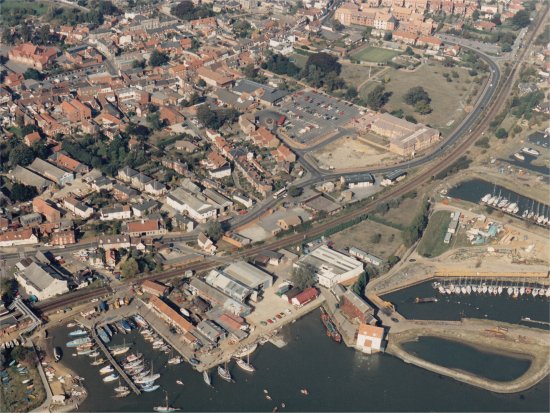
Fortunately when the road was finally built in 1976 it went along the bottom of Elmhurst gardens rather than the top of it. Only 0.31 acres of the 4.4 acre gardens was lost to the road. About the same time as the road was built the one remaining gas holder was demolished and shortly after the canning factory moved to Martlesham Heath.

The closure of the canning factory released a significant most of land which made it possible to transform the area between Brook Street and Elmhurst Park.