Home > The Story of Woodbridge > Maintenance of the Highways
Maintenance of the Highways
By the end of the 15th century most roads were little more than dirt tracks that were very rough and dusty in summer and muddy in winter. Under the Tudors there was an increase in commerce and as a result traffic on the roads increased. Rising concern about the state of the main roads – the highways – led to Parliament passing the Highways Act in 1555.
The Act made each parish vestry responsible for the maintenance of the highways within its boundaries and required them to appoint a surveyor of highways who had to survey the highways three times a year. The surveyor also had to organise any necessary repair to them by calling on all householders to provide labour.
The State of the Roads in Woodbridge
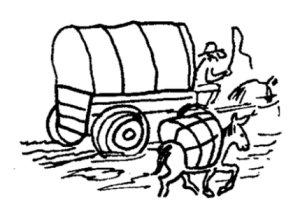
The streets within Woodbridge during the sixteenth century, as in most towns, had a surface of compressed gravel and sand. The parish would have paid for the upkeep of its roads by collecting tolls from the owners of carts that came to the weekly market. The toll levied often depended on the size of the cart wheels. The first major improvement in the roads running through the town appears to have been the paving of Church Street with stones in the early seventeenth century. By 1662 its name had been changed to Stone Street. The Thoroughfare was paved by general subscription in 1753.
Introduction of Charging Those Who Used the Roads
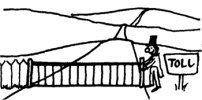
A major step forward in improving the maintenance of the nation’s highways was achieved in 1663. An Act of Parliament was passed enabling justices of the peace to levy tolls on travellers for the repair of that part of the Great North Road which passed through Hertfordshire, Huntingdonshire or Cambridgeshire. To prevent people avoiding paying these tolls, further legislation was passed in 1695 to allow the roads to be blocked by spikes. When the toll had been paid the spikes were turned so they lay on the highway and the carriage was thus able to pass through. Although turnpikes were soon replaced by gates, the name “Turnpike” survived and is still used in America.
The Suffolk Turnpikes
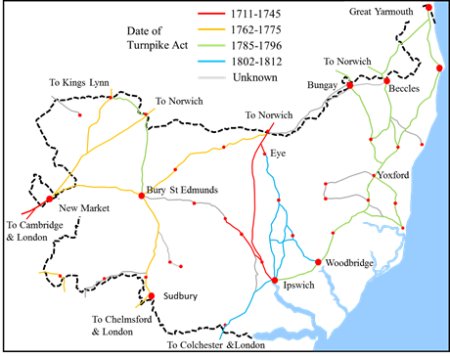
This map shows the turnpikes created in Suffolk. Each is colour coded to indicate when the Act creating them was passed. The Ipswich-Woodbridge-Great Yarmouth turnpike was approved by Parliament in 1785, and the Woodbridge-Debenham-Eye Turnpike in 1802.
The 18th century was the great era of coaching. Improved roads and better coach design increased the speed of travel considerably. The ‘expresses’ were the Royal Mail coaches which were first introduced in 1784. The service from London to Norwich was started in 1785, and from London to Ipswich in1791. By 1836 four Royal Mail routes crossed Suffolk: London to Norwich via Newmarket, Bury and Thetford; London to Norwich via Ipswich and Scole and London to Yarmouth via Ipswich and Lowestoft. Complementing these services were cross-country and local coaches.
The Decline of the Turnpikes
The number of turnpikes peaked in the 1830s and then declined rapidly because the expansion of the railways eroded the revenue of many turnpike trusts. Forced mergers of solvent trusts with debt-laden ones became frequent and confidence in the turnpike system waned. Many of the smaller trusts were perceived as being inefficient in their use of resources and of being riddled with petty corruption.
Many people, especially those in market towns, wanted turnpike trusts closed for other reasons. Toll gates were perceived as an impediment to free trade. When a trust was ended, there were often great celebrations as the gates were thrown open.
In 1862 the Highways Act empowered justices of the peace to split counties up into Highway Districts. Each district was governed by a Highways Board made up of the justices of the peace of the district and ‘way-wardens’ returned by the constituent parishes. These boards took the responsibility of repairing the roads away from the parish vestries. Each Highway District levied Highway Rate to recover its expenditure.
From 1871, all applications to renew licences to operate a turnpike had to be examined by the Turnpike Trust Commission. If a licence were renewed it was on condition that all existing debts should be discharged as soon as possible and the road then handed over to a Highway District.
At their peak there were about 1100 Turnpike Trusts. Eight hundred were still operating in the mid-1870s but by 1881 this had fallen to 184. Fifteen years later all the Turnpike Trusts had been wound up and their roads handed to either the Highway Boards or, from 1888, to the newly created County Councils who were given responsibility for main roads.
How the responsibility for roads changed post 1870
In 1889 the Local Government Act passed responsibility for main roads to the new county councils, who were to bear all of the cost of their upkeep. The highway boards continued to have responsibility for highways other than main roads.
The Local Government Act 1894 passed all the powers, duties and liabilities of existing highway boards, highway authorities or surveyors to the newly created rural district councils. Rural district councils continued to exercise these powers until 1930, when the Local Government Act 1929 transferred responsibility for rural highways to county councils.
The Ipswich-Woodbridge-Great Yarmouth Turnpike
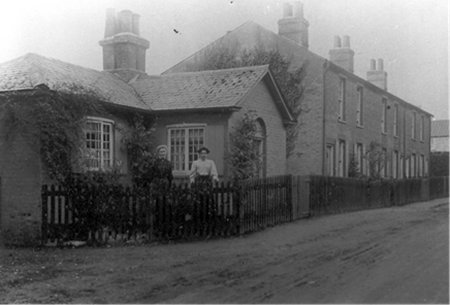
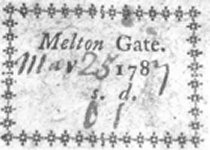
The “Ipswich to South Town and Bungay Turnpike Trust” was established in 1785 and it operated between Ipswich and Great Yarmouth. By then the Drybridge Hill section of the road from Ipswich was so ploughed up by heavy traffic that the route through Woodbridge had been changed. Instead of following the higher ground and coming down the Market Hill, the Turnpike bypassed the centre of the town by running along what is now the Ipswich Road and Cumberland Street. The toll gates controlling the part of the turnpike that ran through Woodbridge were at Kesgrave and Melton. The one at Melton is still standing. It is on Melton Street adjacent to the junction with St Audry’s Road.
The East Suffolk railway line linking Ipswich, Woodbridge and Great Yarmouth was fully operational by 1859 and in 1865 the Home Secretary requested the Turnpike Trust to provide details regarding its operation. He also asked if the Trust’s treasurer thought it were desirable to continue the trust and what was the view of the parishes on the subject. After a long delay the Trust responded with a letter stating that all but one of the trustees did not want to wind up the Trust and cited the reasons why it should continue. The letter also mentioned that 28 of the 41 parishes through which the road passed were in favour of the continuation of the Trust. The Home Secretary responded in October 1866 by saying that the reasons given for the continuation of the Trust were not strong enough. The correspondence carried on for a while but in July 1871 a letter from the Home Secretary stated the “Trust shall be continued until 1st November 1872 and no longer”. When the Trust was wound up it had assets of £243 which were divided between the parishes “upon which had fallen the liability to repair the road, in proportion to the mileage of such road in each parish’.
The Woodbridge to Eye Turnpike
The road from Woodbridge to Eye, via Otley and Debenham was made a Turnpike in 1802 but the trust running it was wound up only 36 years later. All that is known about this trust is based on a report of a meeting at Debenham to celebrate the removals of the tolls. At this meeting it was stated that;-
“A considerable injury was sustained by the town (Debenham) when the road first became a turnpike because it was hemmed in so closely with tollgates. There were two at the Market Bridge, one up Gracious St., one nearly opposite the vicarage, one on the road leading to Winston Green, and another on the road leading to Kenton. This was much complained of and some years afterwards, the one opposite the Vicarage was removed also that up Gracious St and the two at the Bridge, only be substituted further on the Aspall road.”
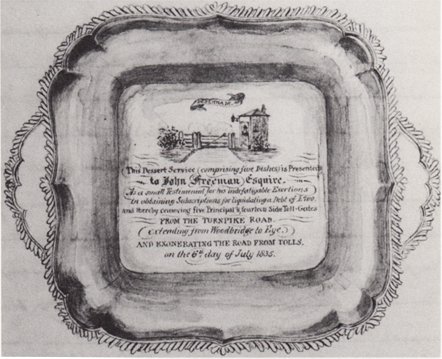
Those at the meeting praised the “exertions and perseverance” of Mr Freeman in ensuring that the debts of the turnpike trust were paid off and thereby enabling the tolls to be removed from the road from Eye to Woodbridge. To reward Mr Freeman the meeting decided to raise money to present him an “elegant dessert service of five silver dishes”. Each of the dishes carried an engraving of one of the toll gates. A photograph of one of these dishes is shown here.
One of the silver dishes presented to Mr Freeman.