Shipbuilding
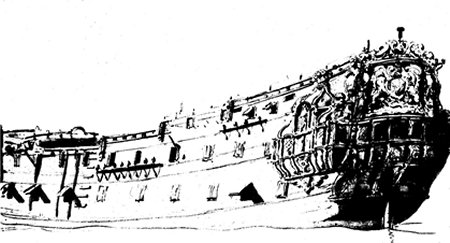
Ships were probably built in Woodbridge from at least the fourteenth century but this activity did not become a major industry until the seventeenth century when men-of-war were built here.
Building Men-of-War
High Suffolk was a prime source for the timber used to build men-of-war and large quantities of it were shipped from Woodbridge to the Royal dockyards.
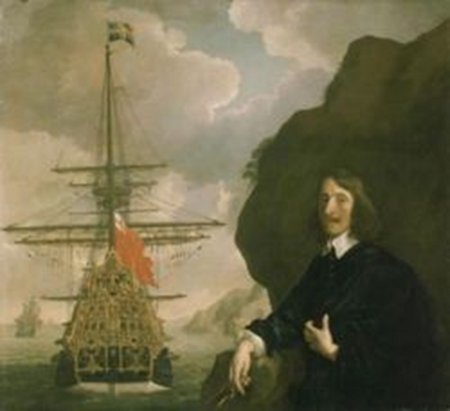
Phineas Pett, Master Shipwright at Deptford, used to come to Suffolk to select the timbers and he realized that it would be easier to build men-of-war at Woodbridge rather than to transport ungainly logs to the dockyards. Between 1630 and 1680 at least 15 men-of-war were built at Woodbridge and it is believed that many of them were commissioned by Phineas or by his son Peter.
Peter Pett was initially his father’s assistant but he eventually became Superintendent of Chatham dockyard and one of the three commissioners of the navy.
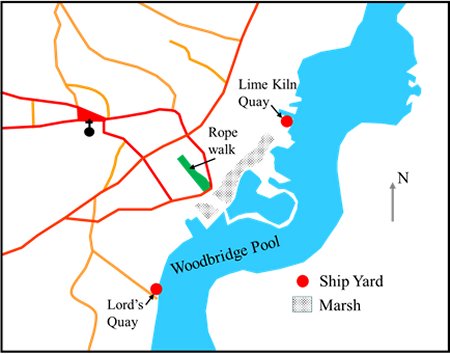
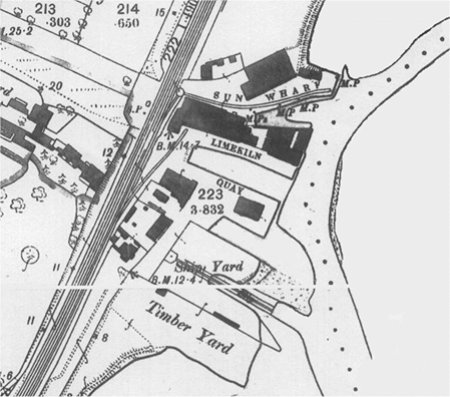
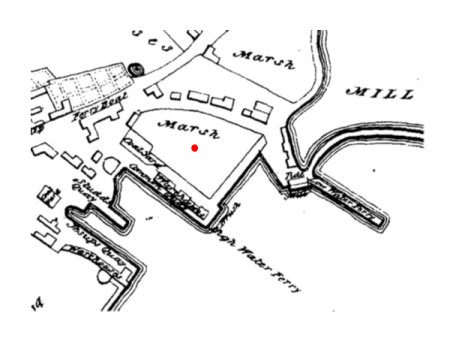
The locations of two shipyards in Woodbridge are indicated by this map as is that of the rope-walk where rope was made until the end of the eighteenth century.
Peter Pett may have benefited from having the men-of-war built at Woodbridge. In 1632, he had married the daughter of the owner of the Lord’s Quay and of other riverside land. Seventeen years later Peter held this land and he appears to have rented it to relatives who built some of the ships that Peter and his father commissioned. This conflict of interests does not appear to have attracted attention. His dismissal in 1667 was because he was judged not to have taken adequate precautions to prevent a Dutch raid on the Chatham dockyards.
The building of men-of war at Woodbridge continued for some time after Peter Pett’s dismissal but it was over by about 1680 and the shipyards reverted to building commercial vessels.
Building Commercial Vessels
By 1730 the shipyard at the Lord’s Quay was ‘cut from the river by a mud wall and almost filled’ but the shipyard on Lime-Kiln quay continued to flourish. It covered the strip of ground running from the Deben right up to the Thoroughfare.
There are only a few records of the ships built there in the 1700s but at least one of them was for the Jamaica trade.
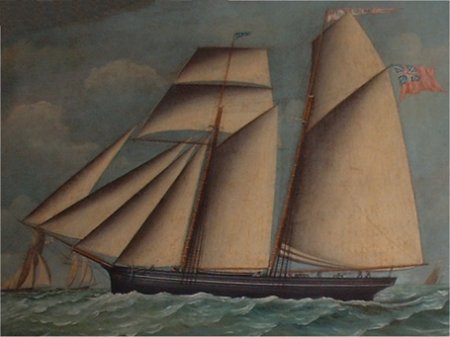
From 1796 the brigs and schooners built at the shipyard were mainly for the coastal trade. The last brig was constructed in 1816 and thereafter only schooners were built.
When the shipyard was advertised to let in 1829 it was described thus. The premises comprise a commodious dock, enclosed building yard, ship warehouse and draft room, wharf, timber-yard, steam plank workshops and counting house’ everything that was needed for a ship-building business.
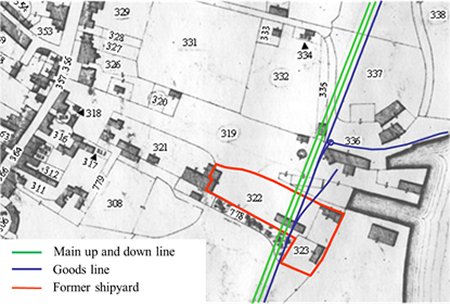
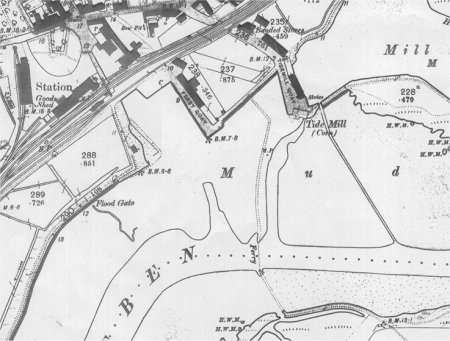
In November 1830 William Taylor took over the shipyard and eight years later it is clearly shown in on a 1838 map. An annotated extract from this map is shown here. The area outlined in red was being used as the shipyard and the area outlined in yellow, which was at one time part of the shipyard, was being used by a timber importer. The red dotted line marks an indent, shown on an earlier map, which was probably a slipway.
Building Boats to be Sailed for Pleasure
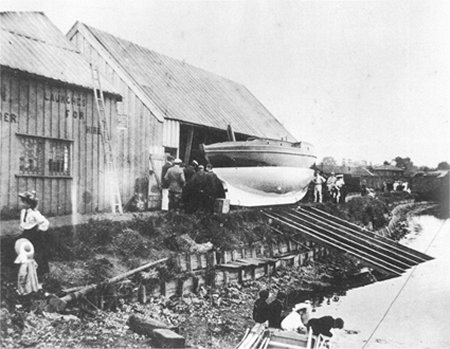
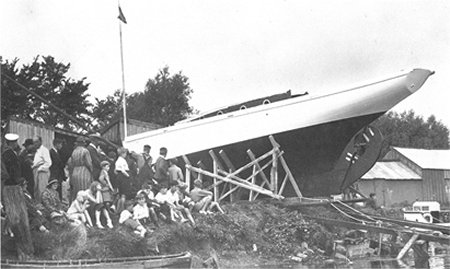
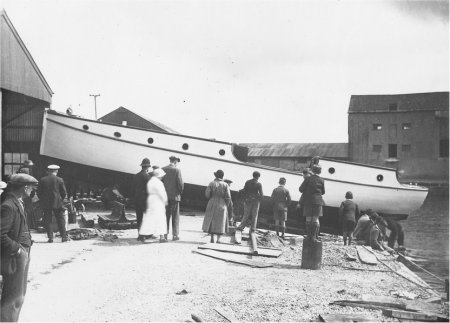
Ebenezer Robertson hoped that his son-in-law Alfred Everson would join his son Robbie at the Lime Kiln Quay boat yard but there was ill feeling between the pair. Undaunted Ebenezer, who owned the coal yard at the end of the Avenue, started Everson’s boat yard there in 1889. This yard became well known for building 12ft clinker dinghies and the 3-ton Cherub, a cabin yacht for estuary cruising. The photograph below show a vessel being launched in about 1900 (top) and another in 1934 (bottom).
In 1912, when Alfred was fifty years old, his yard was destroyed by fire. The yards were rebuilt as the Phoenix works.
The 1939-45 war brought contracts from the Royal Navy to build craft which could use to paint their ships. Enough material was ‘liberated’ from this project to produce a prototype sailing dinghy, Beaver 1, and then a second version Red Beet which became the first of the 14ft Kingfisher class. A total of 29 Kingfisher dinghies were produced between 1943 and 1963 and several examples of the both Cherub and Kingfisher classes on the Deben today. They are still looked after by the yard that built them. In addition to these craft there has been a regular production of small rowing and sailing dinghies.
In 1989 the yard passed from the Everson family to Peter Derby who had great interest in steam power with his yacht Mrya. A number of yachts were fitted out in the yard using mouldings and equipment from the Pegasus Yacht Company. In the 1980s the business passed to Frank Knights and, in 2001, it was taken over by a small group of local yachtsmen who continued the tradition of individual care for many traditional and modern yachts. The group also provided moorings, winter storage, maintenance and repair.
From 2010 the name of the business was changed to The Woodbridge Boatyard Ltd to make it easier to find on the internet.
In 1889 Alfred Everson had became official time keeper and starter for all Deben Sailing Club races. He started the races from his large jetty using blank cartridges in his 12 bore shotgun.
A yacht being launched at Everson’s boatyard circa 1900.
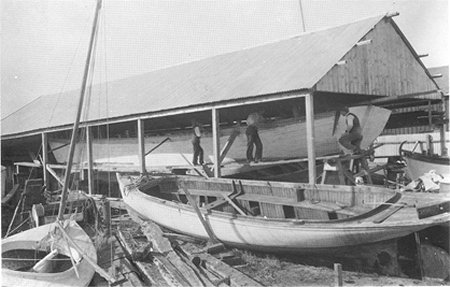
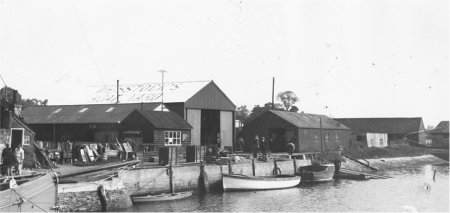
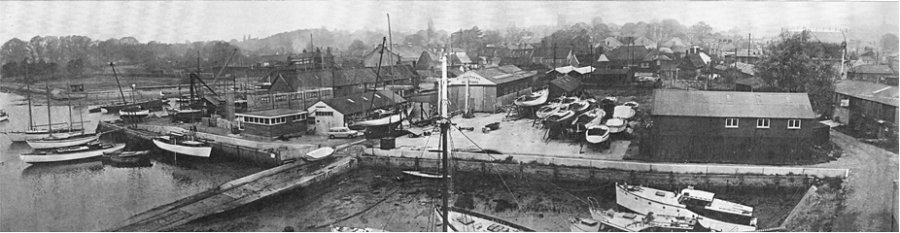
The earliest photograph of Whisstock’s boat yard.
After the Whisstock family sold the yard in 1984 the business soon went into receivership. It managed to start up again only to close finally in 1990. After several attempts to redevelop the site planning permission was eventually given for mixture of residential and commercial developments, a community boat shed and a community heritage building. The latter, which is now the home of Woodbridge Museum, is on the site of Whisstock’s first boat shed.
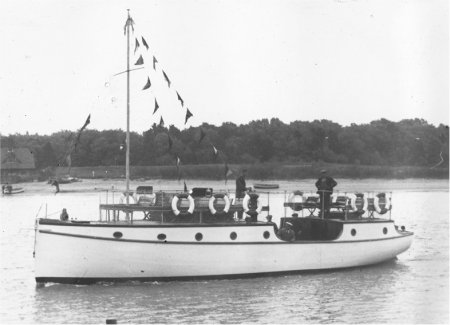
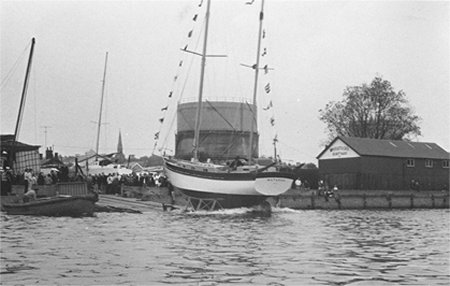
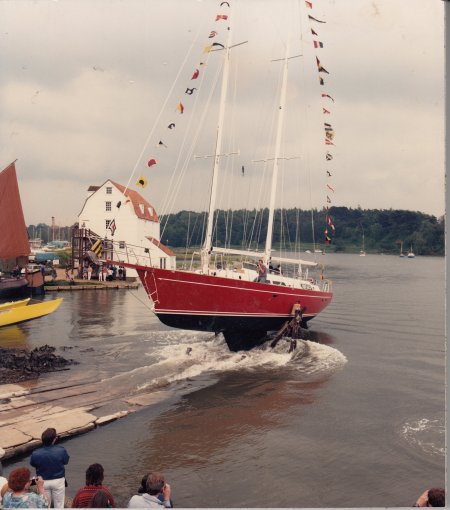
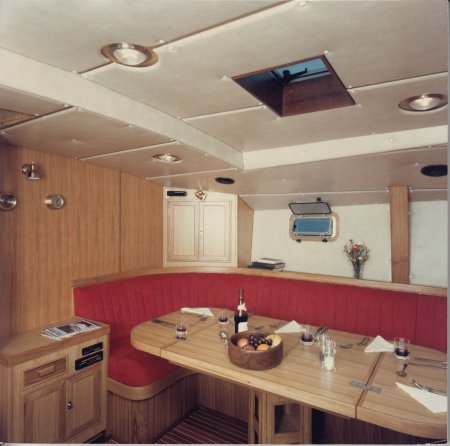
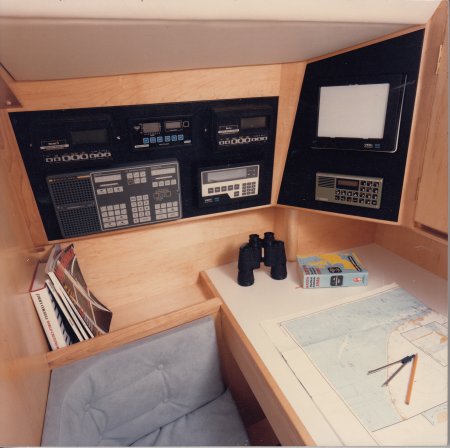
When Claude Whisstock walked out of the boatyard to start a new life in the USA the walls of his office were still decorated with photographs of the last series of boats that he had designed and built. A set of photographs of one of these boats is shown below.