Woodbridge During the First World War
Preparing for War
The government started to reform the Auxiliary Forces in 1872. Thirty six years later the changes culminated in the creation of a new body, the Territorial Force which was linked with Regiments of the Regular Army. By the start of the First World War, the two Regular Battalions of the Suffolk Regiment had been expanded by two battalions of Militia and three volunteer battalions.
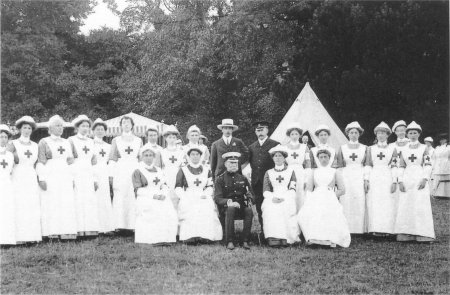
In addition to forming the Territorial Force the War Office announced that the British Red Cross Society and the Order of St John of Jerusalem would provide volunteers to aid the Medical Service of the Territorial Force in the event of war. To provide this support a Red Cross Branch was established in every county and each Branch set up a number of Voluntary Aid Detachments to support the Territorial Forces Medical Service.
The Woodbridge Voluntary Aid Detachment for men, and another one for women, were formed in 1910. They were the first to be registered in Suffolk and were named Suffolk 1 and Suffolk 2 respectively.
Britain Enters the First World War
On 4th August 1914 German troops invaded Belgium, a country whose neutrality Britain had guaranteed. The British Government sent the German Government an ultimatum to withdraw from Belgium by 11pm. No response was received so from that time Britain was at War with Germany.
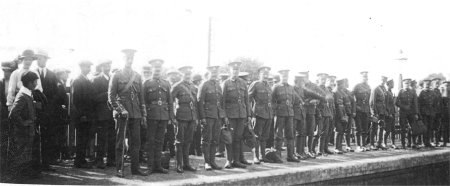
At 8pm the King’s proclamation ordering the embodiment of the Army, Special Reserves and Territorials being put up outside the Post Office at Cross Corner. “A number of men rushed to see the purport of the proclamation and some cheering was attempted. The crowd quickly increased during the hours up to 11 pm and there was much discussion about the grave aspects of the war news. The Post Office was kept open all night and the constant going and coming of telegraph messengers on their bicycles aroused no little interest.” Next day members of the Royal Army Medical Corps left Woodbridge by early morning train. Towards the end of the afternoon the Territorials, headed by a band, marched through crowded streets to the Railway Station where the platform was crowded with the wives, children and friends of the men.
Royal visits during the early stages of the war
The Creation of the 'New Army'
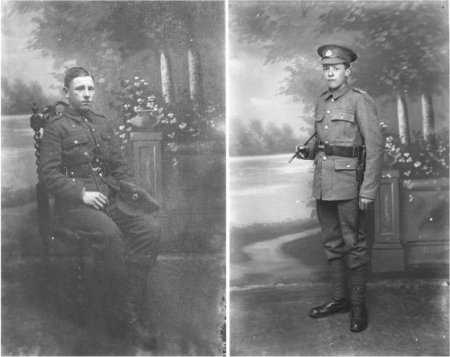
Lord Kitchener was made Secretary of State for War and three days later he announced the creation of what was soon dubbed the ‘New Army’. Almost immediately recruiting posters, depicting his stern image, were everywhere. In the Parish Magazine for Sept 1914 the Rector of St Mary’s Church wrote, “The mass of the people do not realize that whilst Belgium was but a high-road to the enemy’s plan, his true objective is Paris, and then London. The reports of the doings in Belgium should arouse the men of Great Britain to their own responsibilities, their country’s need and the dangers which may even threaten their women and their homes.”
By September the following year a total of 515 Woodbridge men had enlisted in the Armed Forces. 39.6% of them were in the Suffolk Regiment, 8.5% were in the Navy and 6.4% in the Royal Army Medical Corps. The remainder were distributed over another 57 regiments or units.
By January 1916 two and a half million men had enlisted nationally but the supply of volunteers was drying up. So in February, for the first time in its history, Britain had to introduce conscription.
By the end of the war at least 801 men from Woodbridge, some 37% of the adult population, had served in the armed forces and there is some evidence that the number may have been as high as 1100.
Woodbridge became a Garrison Town
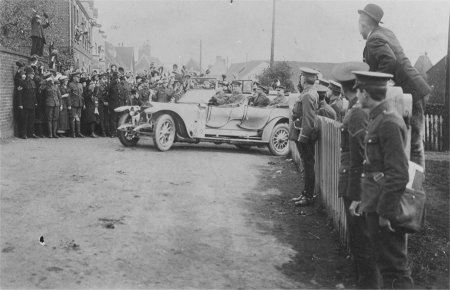
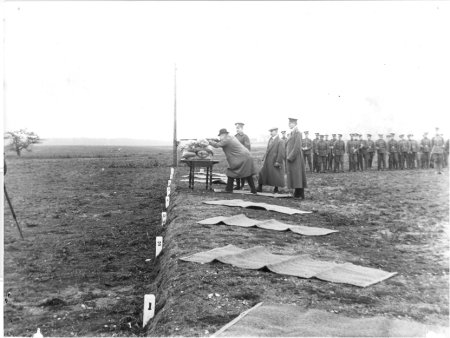
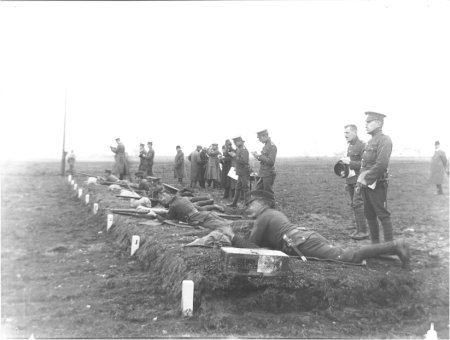
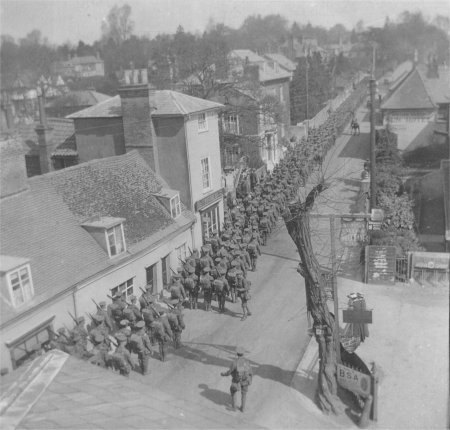
Soon after war was declared Woodbridge became “literally a garrison town”. The Anglian Daily Times on 14th August reported that Woodbridge was in a state of excitement because every available building had been commandeered and arrangements made to billet a large number of territorial troops from Suffolk and Essex. On 10th November they were all inspected by King George V and, on a later visit, he opened a shooting range at nearby Bromeswell. Troops were also billeted in other towns and villages in southeast Suffolk.
When the troops first arrived the newspapers indicated that they were here to counter any invasion. At the end of December 1914 a member of the Suffolk Yeomanry, which had a camp in Woodbridge, is quoted as saying that “when we arrived we felt certain that we should go almost immediately to meet the foe or the foe would come to meet us”. As the war reached a stalemate, however, it became clear that the troops were primarily here for training.
There are many reports of the townspeople providing support and help for the troops. During the winter months a series of successful concerts were arranged for the troops through the efforts of a Miss Cayley and other ladies. “The programmes were said to be “of a varied character, and always afforded rich musical treats. The women of Woodridge were also busy producing comforts, such as mufflers, socks, mittens and waistcoats for the troops serving in the Suffolk Regiment and various items for the injured soldiers at Foxboro’ Hall. Woodbridge women were also fund raising for Suffolk prisoners of war, the Red Cross and the War Hospital Supply Workroom.
The Experiences of the Suffolk Yeomanry while at Woodbridge
The Suffolk Yeomanry were amongst the troops who spent time at Woodbridge and an account of their experiences is given The Loyal Suffolk Hussars. The Yeomanry were instructed to assemble in the town soon after war was declared. During the final months of 1914 they saw other troops, such as the 4th battalion of the Suffolk Regiment, being dispatched to the front from Woodbridge station.
The morale of the Suffolk Yeomanry declined with the onset of winter, which brought very muddy conditions to the stables. By then Grange Farm, on the Hasketon Road, had become the centre of their training. Army huts had been established for the men and a wooden shed for the horses. Eventually, proper stable huts with concrete floors solved the mud problem.
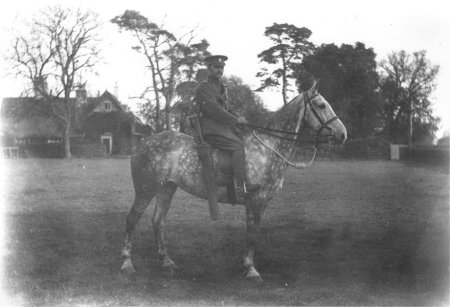
A letter card from “Grange Farm Camp – Woodbridge” has been found recently. It is post marked 23rd December 1915 and it contains eight views of the town. It must have been produced so that soldiers billeted at the camp could give their relatives an idea of where they were. With this card there was a photograph of a mounted soldier at what appears to be Grange Farm.
The Yeomanry found life at Woodbridge with its drill and training very tedious but their moral was eventually lifted in July 1915 when they moved near to the sea by Leiston. There they camped in tents, with the horses being picketed in lines. The commanding officer regularly took the squadron down to the shore and he wrote that “bathing on horseback is a delight to experience … Never before have we looked so Olympian, as when bestride our bare-back horses in a complete state of nudity”. He went on to say that the stretch of sea coast was remote and closed to the public.”
From other sources it is clear that there was also a large summer camp at Broomswell. The troops came back from this, and other summer camps, to their billets in Woodbridge during the winter.
In early September 1915, the long-awaited departure orders arrived for the Suffolk Yeomanry but, because the need for cavalry was limited, they had to leave their horses behind.
Red Cross Hospitals in the Town
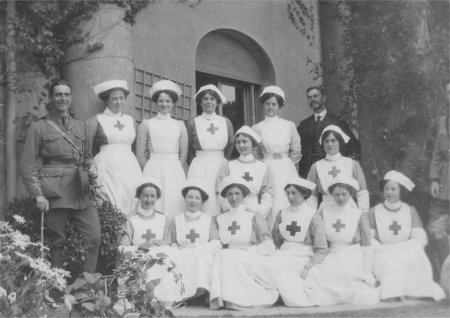
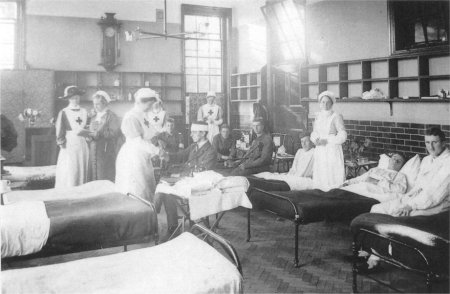
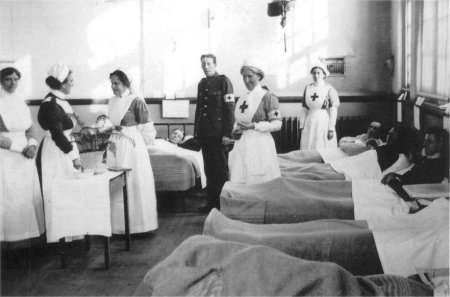
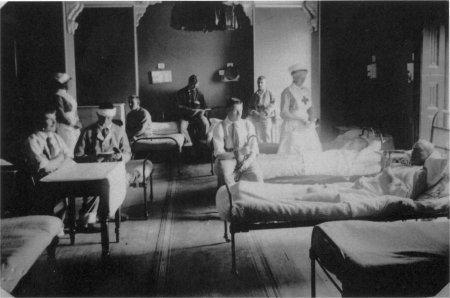
On 6th August 1914, to provide medical aid to the troops in the area, the Woodbridge Red Cross set up an auxiliary hospital in Woodbridge School. Within a few days a Field Ambulance Unit of the Royal Army Medical Corp arrived from Luton and commandeered the hospital but the VADs remained to assist the medical officers.
After 5 weeks the hospital had to be closed to allow pupils to return to the Grammar School. Over the next five months the hospital was moved between other buildings in the town, including the Council School at the bottom of New Street. From about February 1915 the hospital was at Foxboro’ Hall and it remained open until April 1919.
In her diary one of the nurses at Foxboro’ Hall recalls that, “In the early part of the war most of the patients were soldiers who had fallen off their horses or motorbikes”. In 1915 rivalry among the regiments broke out into open quarrels and another nurse recorded in her diary, “that men from the King Edward’s Horse, and men from the Monmouths, who did not appear to like each other much, thronged the Thoroughfare where they actually had a bayonet charge. One man was admitted to the Red Cross Hospital with severe abdominal injuries though it was later found that he was only very drunk.”
Other photographs of the Red Cross Hospitals
The Zeppelin Raid on Woodbridge
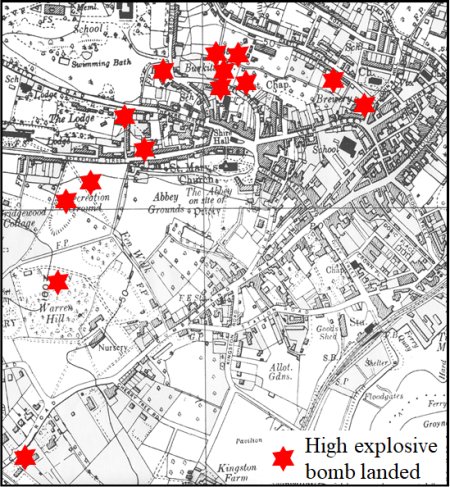
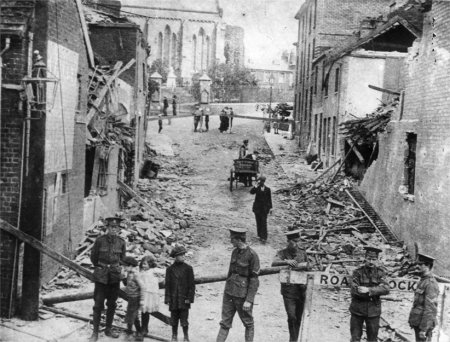
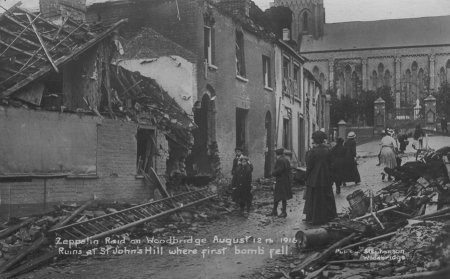
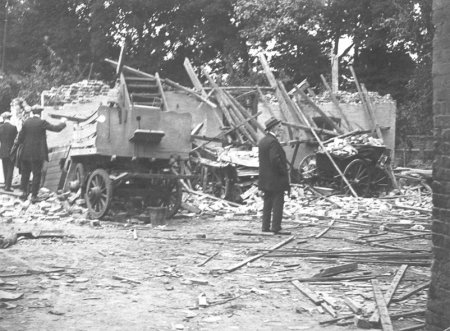
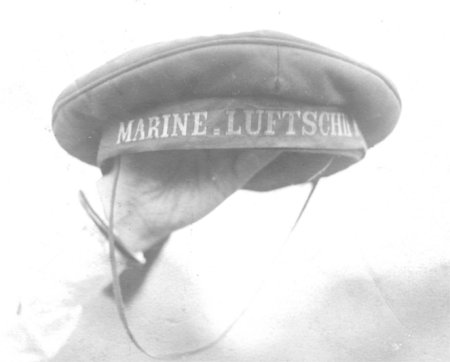
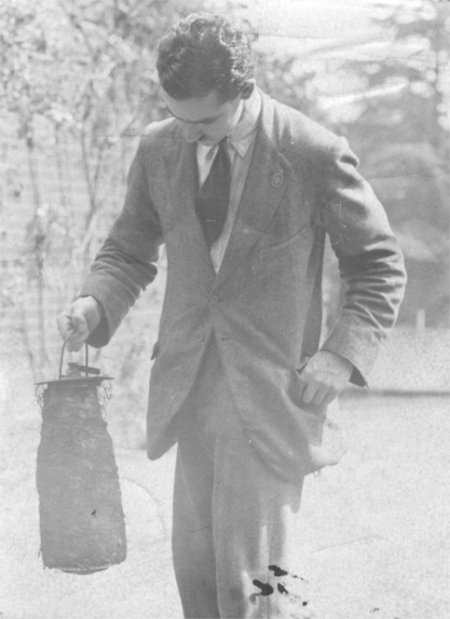
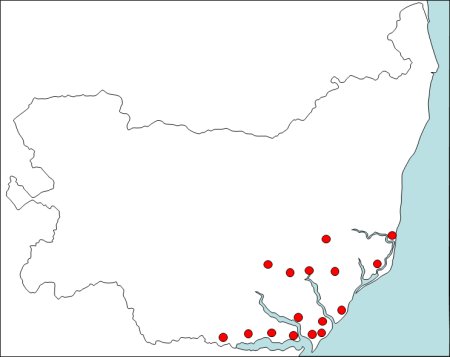
On 12th August 1915, just before the Yeomanry left Woodbridge, a German Navy Zeppelin dropped 28 high explosive and incendiary bombs on Woodbridge. This map shows where the high explosive bombs landed. The first fell on St John’s Hill at10.30 pm and the last on the Ipswich Road a few minutes later. During the raid six lives were lost, 23 people were injured and over a hundred houses were destroyed or damaged.
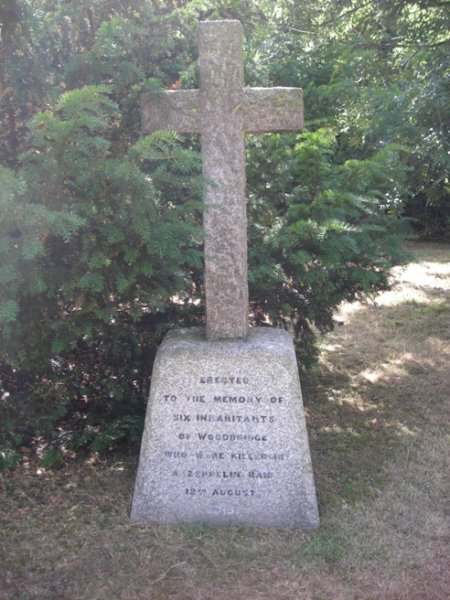
The injured were first treated at the Council School and then taken to a temporary Hospital at Hamlyn House, Cumberland Street, where some of the Red Cross VADs attended them until they could be moved to Ipswich Hospital. Woodbridge Fire Brigade led the funeral procession of the six people who died in the raid. One of the victims was a fireman on his way to the fire station. Their graves and a memorial to them are in Woodbridge Cemetery. The funds to create this memorial were raised at the same time as those to establish the Market Hill memorial to those who were killed in action or died from injuries received.
Woodbridge was not particularly unlucky to have suffered such an attack; other Suffolk towns were bombed by Zeppelins from April 1915 and in May that year a Zeppelin dropped bombs within a mile of both sides of Woodbridge. The press had given copious details of most of the earlier attacks but by the time of the one on Woodbridge there was clearly concern that such information, even in provincial newspapers, may be of interest to the enemy. The Reporter’s account of the Woodbridge Raid was simply “On Thursday night a Zeppelin dropped bombs on the East Coast – 6 people were killed and 23 injured.” Subsequent appeals for those affected by the raid just referred to “The Explosion”. The Reporter did not print a full account of the raid until the war was over.
Increasingly stringent black-out restrictions were imposed and in March 1916 green lights were placed at certain locations around the town to warn that an air raid was imminent. It was not until the end of 1917 that an electric air raid siren was installed.
The reign of terror of the Naval Zeppelin L10 which bombed Woodbridge was short lived. On the afternoon of 3rd September it was on a reconnaissance flight over the North Sea. On its return it could not avoid flying through a thunderstorm and was struck by lightning. It fell in flames into Elbe Estuary. None of the crew of 19 survived.
Map showing where the high explosive bombs dropped by Naval Zeppelin L10.
Images Related to the Zeppelin Raid on Woodbridge
In the Town

Retribution
The reign of terror of the Naval Zeppelin L10 which bombed Woodbridge was short lived. On the afternoon of 3rd September it was on a reconnaissance flight over the North Sea. On its return it could not avoid flying through a thunderstorm and was struck by lightning. It fell in flames into Elbe Estuary. None of the crew of 19 survived.
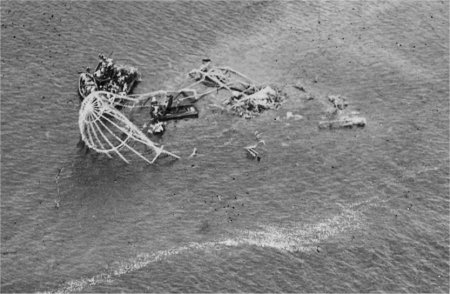
The early Zeppelins, such as the L10 which bombed Woodbridge, were no match for the air defences that Britain built up. Four Zeppelins had been brought down over England, three of them in flames, in a little over two months in late 1916. Their most effective adversary was the aeroplane. The best defence for Zeppelins was to fly at much higher altitudes.
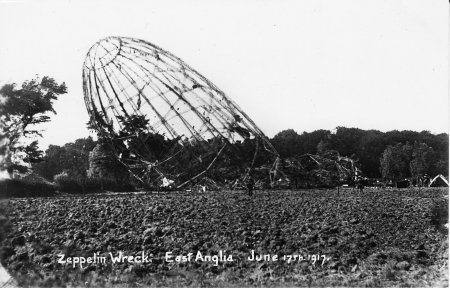
The new L40 class Zeppelins, which went into service in in 1917, could operate smoothly at 17,000 ft. One of the airships delivered in the spring of 1917 was the L48, which had a control gondola which was much lighter than her sisters and other improvements that fitted her for a new wave of raids. German records show that L48 made her first flight on 22 May 1917 and flew a total of 6,099km before crashing at Theberton twenty six days later.
On that fateful day, L48 crossed the Suffolk coast a little north of the Deben at 17,000 ft and headed towards Ipswich, dropping nine high explosive bombs on Falkenham, sixteen on Kirton and three on Martlesham. They fell mostly in fields, doing little damage. But that and ground anti-aircraft fire made some people think that a naval battle was happening.
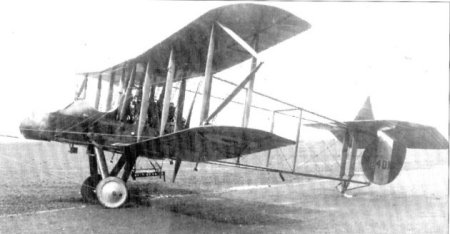
At 3 am L48 received a radio message from a German observation ship in the North Sea. It reported a good westerly at 13,000 ft, which would blow the Zeppelin safely home. However, L48’s luck ran out over Harwich harbour. Her forward engine failed, her rudder controls were faulty and she started to loose height. Worse still an air attack was under way. L48 started drifting from side to side and, instead of going east, turned north towards Aldeburgh and Leiston at a height that favoured three fighters from Orford Ness. They all shared the credit for downing her.
The Home Guard
Those injured by the by Zeppelin raid on Woodbridge would have been helped by the troops in the area and by the precursor of the Home Guard. From the very start of the war there was anxiety over a possible German invasion of the east coast of England and in time honoured fashion many unofficial town or civic ‘guards’ soon appeared to take on the task of local defence. At first the government gave no encouragement to these local amateurs, but, in November 1914, when a rapid German advance towards the Channel coast caused alarm, a ‘central association of Volunteer Training Core’ (VTC) was given official sanction. From July 1916 it became part of the Territorial Forces, and those serving in it received proper service uniforms and mandatory training. Most of them were retired soldiers and, because they had an armband or badge with GR on it, they were sometime called the ‘Genuine Relics’ and ‘Grand papa’s Regiment’.
The Woodbridge and Wickham Market Recorder for 4th Feb 1915 stated that “The great desire of those above military age to do something in defence of their country in the event of an invasion, found expression at a large and representative gathering at the Lecture Hall. After an explanation of the change in the government’s position, it was moved that that 40 to 50 men be recruited to form a platoon of the VTC for the Woodbridge District.
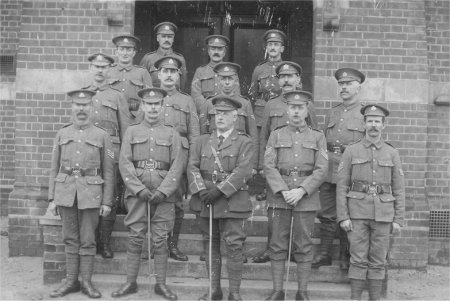
In Suffolk the VTC became the 4th Volunteers Battalion of the Suffolk Regiment. There were four companies each having four platoons. Each platoon was centred in a different town or village from Aldeburgh in the north to East Bergholt, Brantham, Stutton and Shotley in the south. Woodbridge, in the centre, was the headquarters of the battalion. No1 Platoon of A Company drew it men from Woodbridge and Melton. Some of its officers were probably former soldiers but they would not have experienced anything to match the horror and carnage which beset their fellow townsmen who fought during the First World War.
The Home Front
The Women's Land Army
To replace farm workers recruited by the armed forces and hopefully increase the countries food production the government created the Women’s Land Army. Some farmers resisted this measure so, in 1916, the Board of Trade began sending out agricultural organizing officers to persuade farmers to accept women workers. This strategy worked and by 1917 there were over 300,000 women working as farm labourers.
At times during the year up to a hundred women, the majority of who were with the Women’s Land Army, were involved in market gardening in the Woodbridge area.
The “Land Girls” in Woodbridge came from all over the country. Some lived with the farmer’s family, and others in hostels under the care of a warden. There were hostels around Woodbridge at Little Manor Hasketon, Sutton Rectory, Sutton Hoo House and Grundisburgh Hall.
They could expect to do a wide range of agricultural work for a wage of 1 guinea a week and holidays at Christmas and Easter. One recruit said, “being a Land Girl meant always being hungry, having sore blistery feet and a sore back”. Despite all the hard work, many former Land Girls have happy memories of the days in the Women’s Land Army.
At a “Women on the Land” meeting in Melton during April 1916, women were encouraged to volunteer to work on farms, but it was made clear that those who gave their names were not pledging themselves. They were merely giving farmers the opportunity of approaching them when the need arose, and they could choose to go or not as they pleased.
The extent to which the scheme eventually evolved is made clear by the following the notice on the right. It was published in the Woodbridge Parish Magazine on the March 1918.
The only other information in the local press of women volunteering to work on the land are, sadly, the occasional coroner’s report on the death of a member of the “Women’s Land Army”.
Prisoners of war were also put to work on farms and there was a local source – the Prisoners of war camp which was established in the Ridley Car Works which was on the site on which the Duke of York public houses now stands.
WOMEN'S WAR AGRICULTURAL COMMITTEE
The Committee will be very much obliged if all who are willing to assist in the Production of Food in Woodbridge, by working on the Land, or by assisting in any Department of Agricultural Work or by Gardening, either as Part or Whole Time Workers, will kindly give in their names to:- Mrs. John Arnott, Deputy Parish Registrar for Woodbridge.
By so doing, workers can more easily be obtained by those requiring Women Labour-through the Register of Names. Women are urgently needed for Land Work. Those who can sign on for 12 months are entitled to receive:-
- A Short Course of Instruction & maintenance.
- Two complete working outfits in the year.
- A minimum wage of 18/- a week.
- Free Railway Warrants upon taking up and changing employment.
Those who can sign on for six months receive:-
- One free outfit.
- A minimum wage of 18/- a week.
- Free Railway Warrants.
Mrs. Arnott will also be glad to receive names and addresses of women who not being able to sign on for six months’ or twelve months might yet be able to leave home for a. shorter period of a month or six weeks to work in gangs in the summer, on farms away from Woodbridge.
Food Shortages and Rationing
Other Contributions of Women to the War Effort
By 1917 three out of every four workers in the munitions factories were women. The newspaper called them ‘munitionettes’. Most were young, single working class women and for the first time they had money and independence – they were no longer under the authority of a father or an elder brother. There was concern about their drinking, smoking and short skirts and of the possible threat this posed to the moral order. But rather bizarrely one of the outcomes of women having more money was that piano sales boomed.
Nationally the number of women in paid employment increased by 50% during the war and the number in domestic service fell. Apart for the occupations already mentioned women also served as clerks in banks, post offices, and government offices, and, for the first time ever, as auxiliary soldiers and sailors, as police officers, as omnibus and railway conductors, and in a host of other traditionally masculine preserves.
Women with young children were far less likely to join the paid work force and, by 1916, the national government was paying a monthly allowance to the wives and children of more than a million soldiers in the British army. Such allowances, collected by the wife at the local post office, often provided many families with a larger and more dependable source of income than had unskilled or unreliable husbands in peace time and there is evidence that fewer children were poorly nourished.
If you any have any verbal or written accounts of what Woodbridge or Melton women did during the war please make them available.
The End of the War
By August 1918 it was evident that the war might be coming to an end. Shortly after 10am on Monday 11 Nov 1918 the local paper reported that “rumours were current in Woodbridge that information had been received by the military authorities that an armistice had been signed, but these were largely discounted, because the morning papers had suggested that the process was delayed. The fact that the war had ended was, therefore, not accepted until the official confirmation of the announcement was posted, shortly after 11 am, in the window of The Woodbridge and Wickham Market Reporter on the Thoroughfare. A crowd quickly gathered and the news spread rapidly throughout the town and “flags and streamers were soon hung from the windows and fronts of many houses and business”.
Enthusiasm increased and Church Street and Thoroughfare became crowded with soldiers and civilians. Drum and bugle bands, followed by a large number of soldiers singing, shouting and cheering continued to parade through most parts of the town until nearly nine o’clock in the evening. The soldiers were accompanied by young people. The bells of St Mary’s Church were rung at intervals and thanksgiving services were held at the various churches in the town.”
The town then entered a period where some of the service men were demobilized and returned home but, until the formal Peace Treaty was signed many remained on duty in various parts of the world. Some 63% of British servicemen had been demobilized by April 1919 and 90% by April 1920.
The Peace Treaty was eventually agreed and signed on 28 June 1919. News of this was received at Woodbridge just after half past three and was posted at the office of the Woodbridge & Wickham Market Reporter. The brief message “Peace was signed at 3.12 this afternoon” was eagerly read and quickly spread throughout the town and soon flags and bunting were in profusion along the main streets, especially the Thoroughfare.
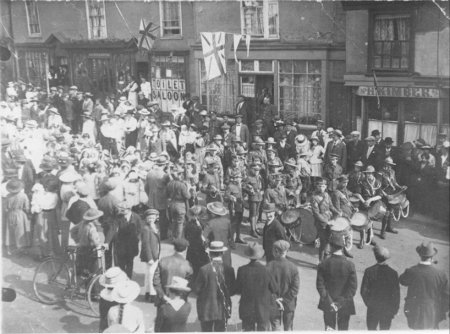
The Government announced that the official day for celebrating the peace would be Saturday 19th July. To decide what form these celebrations should take in Woodbridge, a public meeting was convened at the Shire Hall and agreement was reached on draft programme of events which was to be funded by general subscription.
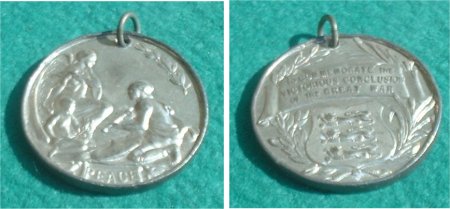
On the day, celebrations commenced at 8am when “Peace Bells” rang forth in Jubilation from St Mary’s Church and flags, bunting and streamers were in evidence throughout the town. At 9am all the children in Woodbridge mustered on the Market Hill and then marched, headed by the band of the Boy Scouts, to the Council School where they had breakfast half an hour later Some 900 children were present, including 67 on holiday from London Schools. They were all presented with a Peace Medal.
At 11am a United Divine Service was held on the lawn of Woodbridge Abbey. The celebrations then resumed at 2pm when rustic and aquatic sports were held on the meadow near the river. Then at 6pm dinner was served to 300 ex-service men. From 7pm this was followed by a jovial hour. Then, at 8 pm the celebrations finished with a Promenade Concert and fancy dress party on the Fen Meadow. The Excelsior band provided dance music and at 9.30pm there was a Bonfire.
Remembering Those Who Made the Supreme Sacrifice for King and Country
Throughout the war actions had been taken to ensure that who were “Fighting for King and Country were remembered”.
From October 1914 there was to be found in the west end of St Mary’s Church, near the porch door, a list of all the men who had left the town for active service. In the Parish Magazine the Rector wrote:-
“It is hoped that many will come and read over the names of these our brothers who have placed Duty before the many comforts of home, and those so reading will go down on their knees and ask the Almighty Father, for our Lord and Saviour’s sake to shield and defend these our protectors in the time of danger, that the Divine presence will lead them on to a victory which will be for the benefit of Europe in general, for the restoration of a rightful and abiding peace, otherwise, if this war is not carried on to the necessary end, all this great sacrifice of life will have been in vain.”
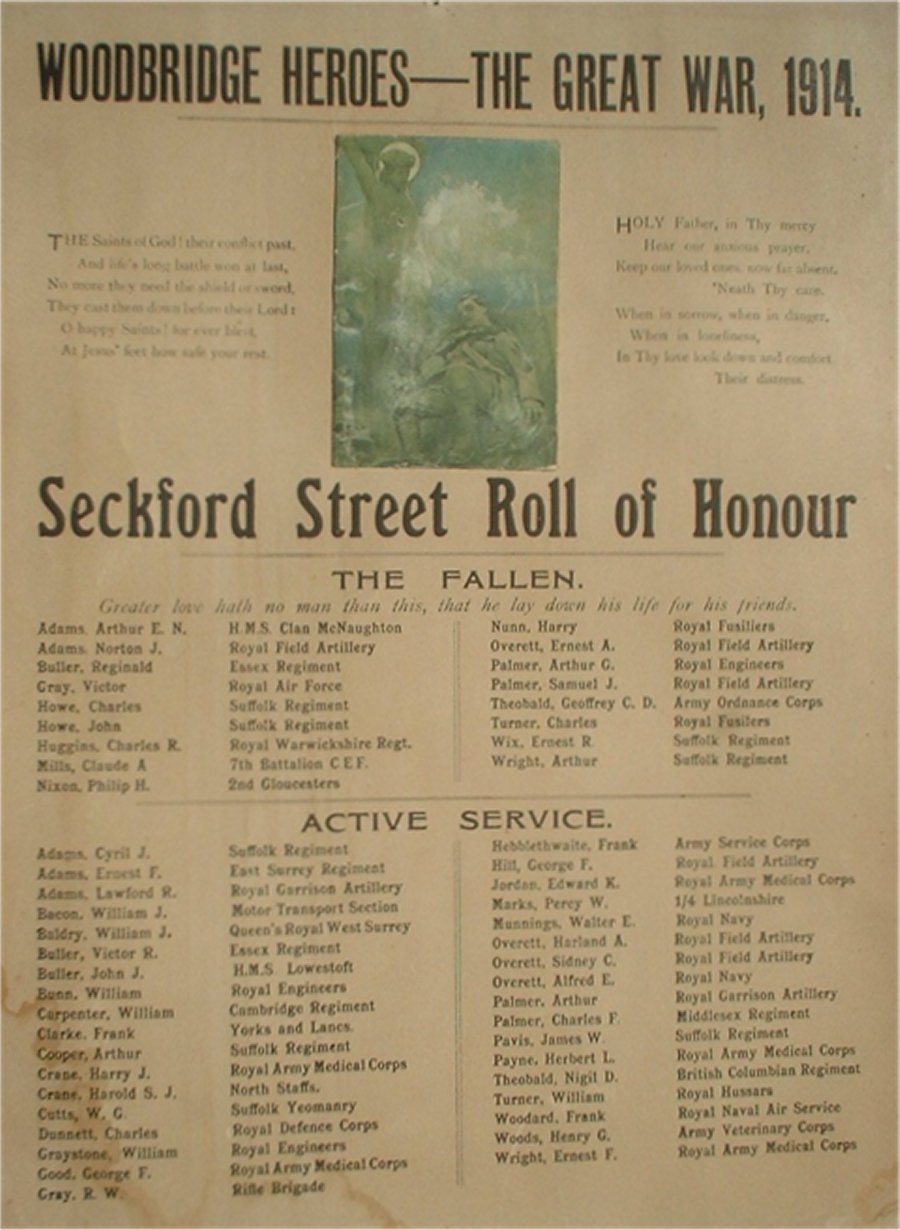
In November 1916 it was announced “that Street Shrines commemorating the many Woodbridgians Fallen and Fighting in defence of their King and Country, were to be affixed in every street in the parish to the Glory of God and the Honour of brave men. The Shrines were made of very old oak, and were intended to be a permanent memorial to the glory and honour of the town.
Woodbridge Museum has ten such Rolls of Honour which most likely came from these shrines. Each sheet is 1ft 10in tall by 1ft 4in wide. Many of the sheets held by the museum were clearly produced after the war was over because some of the fallen died during the final stages of the war or just after it.
The Roll of Honour for Seckford Street

The Memorial to the Fallen
The early thoughts on what would be the most fitting memorial to the men who made the supreme sacrifice for King and country were summarized in The Woodbridge and Wickham Reporter of 30 January 1919. The options were then a Hall or Institute for young men, a bridge over the Deben to replace the Sutton Ferry and a plain granite column on Market Hill inscribed with the names of the fallen.
On the 30th May 1919 the newly elected Woodbridge Urban District Council held a public meeting to consider proposals for a memorial. A representative committee of 25 members was appointed and they were asked to look into three proposals:- (i) a hospital, (ii) houses to be erected and then rented to the widows of those who fell and (iii) a red granite cross or obelisk on Market Hill with the names of the fallen men inscribed thereon. The committee eventually rejected the hospital option on the grounds of cost and did a detailed analysis of (i) cottages for war widows (ii) a memorial cross and (iii) financial help for the children of the fallen. The committee estimated that building four cottages would cost £1,800, the Cross and inscriptions would cost £350 and that a £1000 would produce a £90pa annuity for 15 years to support the children of the fallen.
A public meeting was held towards the end of September 1919 to consider the options and the resolution that a memorial cross be erected was carried by 35 votes to 5. It was also agreed that a public subscription be started to raise the required funds and that any money left over should be to used to help the children of the fallen, and within two weeks an appeal for funds was launched.
By the end of March 1920 the public subscription had raised £828 and the Woodbridge War Memorial General Committee started to discuss where the cross should be placed. By late June it had decided that the cross should be placed in the small public garden on Market Hill.
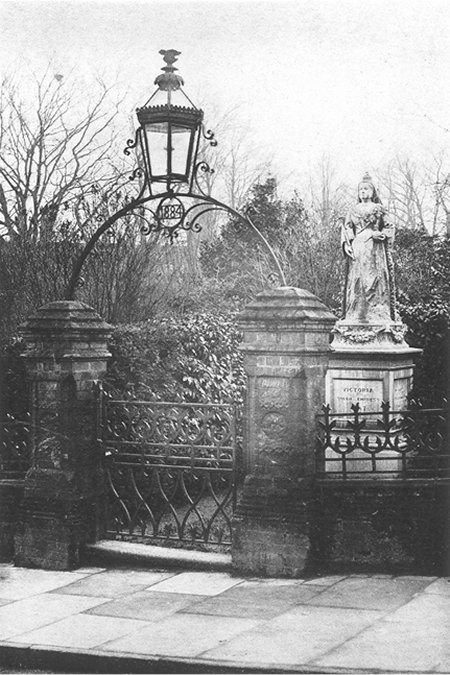
The land for the garden was given to the town by the American naval captain William Mann in memory of his father who was born in Woodbridge. Three years after garden was opened it was decided that it would be appropriate place to put a statute of Queen Victoria in order to commemorate the 50th anniversary of her reign.
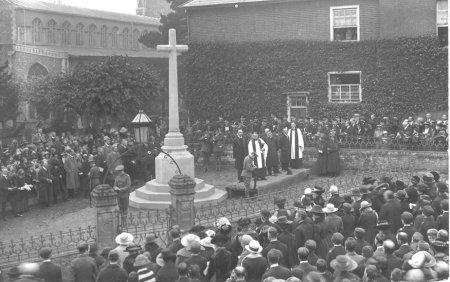
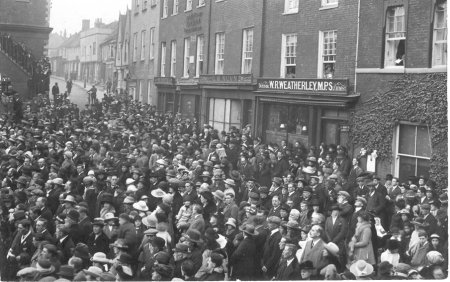
The War Memorial was dedicated on the Sunday before the second anniversary of the Armistice. The statute of Queen Victoria was moved from the centre of the enclosure to make way for this simple cross based on those which, before the seventeenth century, stood in the market places of many East Anglian towns. While the last hymn, For all the saints, was being sung, the relatives came forward with their floral tributes and laid them at the foot of the column. Those attending the dedication filled the whole of the lower end of Market Hill. That evening all the services in the Churches in the town were of a Memorial nature.
The Woodbridge War Memorial Committee raised £876 by subscription. After meeting the costs of memorial, £522 was left to be used to provide finical support for the children of the fallen and in early January 1921 the Committee announced that a list of beneficiaries was to be created. Unfortunately it has not yet been possible to find out what subsequently happened to this fund.
The 133 names inscribed on the memorial were all put forward by relatives and friends. It is not a definitive list. There would appear to be 7 other men with Woodbridge connections who do not appear on the memorial. Take for example the case of Arthur Wood. Tributes to him appeared to in both the W & WM Reporter and an Almanac, and his name is also on a Street Shrine, but it is not on the war memorial. He was a regular solider who had served in India and was killed in action in December 1914. His parents were living in Woodbridge at the time.
The memorial records the names of those who made the supreme sacrifice but it also proper to remember those who were crippled, gassed or wounded. For them, and their families, life would never be the same again. Most of those who returned also had horrific memories which tormented them for the rest of their lives. Memories that they often felt could not be shared with their families.
The Post War Period
The war time government had started to plan for it two years earlier and had appointed a Minister of Reconstruction to centralize post war planning of industry, housing, public health, and transportation facilities. These proposals assumed the existence of a stable economy and the temporary continuation of wartime rationing and price controls. In the event, none of these proved possible and most of the initiatives were not implemented.
However, one initiative of the war time government changed Britain for ever. In February 1918 Parliament passed The Representation of the People Act. It eliminated property qualifications for male voters and gave every male over 21 the right to vote. Women over 30 were also given the right to vote. The age differential remained for a decade because of a lingering fear that English political life might be dominated by a female majority. In other respects men and women, for the first time in British history, became politically equal. Thus the aim that the pre war suffragettes had been unable to achieve by violence was granted to women en masse as a reward for their patriotic support of the war effort.
The changes in the franchise increased the electorate of the Woodbridge Division from 13,454 to 30,421. But in the General Election of December 1919 only 46% of the electorate of the town of Woodbridge voted.
The returning veterans did not find “Civvy Street” paved with gold, but in most areas of the country they had no difficulty locating jobs because many companies worked overtime filling orders for civilian goods and poured capital into plant expansion.
Although there is evidence that many returning Woodbridge servicemen were immediately taken back by their former employers this was not the case for all. In May 1920 a letter published by The Reporter stated that many ex-service men in Woodbridge were near starvation because their former employers could not find jobs for them.
The other major national problem was a shortage of housing and this was also a problem in Woodbridge. Although most of the billeted troops had left the town by May 1919 the Urban District Council was concerned that the Military Authorities were still holding on to many houses although they were not needed. The local paper noted that many of these houses were now empty and that this was a disgrace to the town because there were a large number of people requiring houses.
In June 1920 the Urban District Council agreed to award a contract to erect 14 houses on Barrack Road for rent. These houses were completed by March 1921.
No sooner had employers and their employees become accustomed to the immediate post war boom than, in 1921, the economic bubble burst because international trade did not return to the pre-War levels. Long-term unemployment became a major problem and it got worse, in 1929, when the stock market cashed in the United States. It’s world wide impact caused British industrial output to drop by a third and, during the years 1921-1938, one in seven of the working population was looking for a job.
In 1930 the population of Woodbridge was still about the same level as it had been for 70 years but the town’s long period of stagnation was about to end. In that year the bypass was built as a venture to provide work for the unemployed and a number of new businesses began to spring up in or around Woodbridge. The population started to rise again and it has not stopped since.