Church Street & Turn Lane

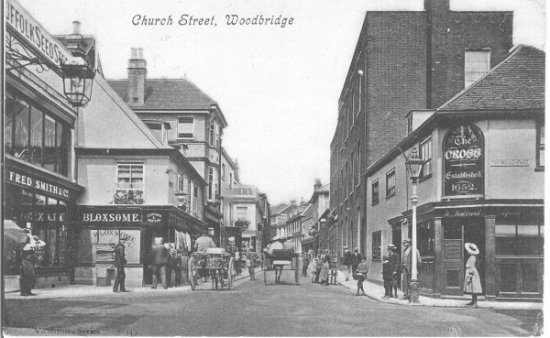
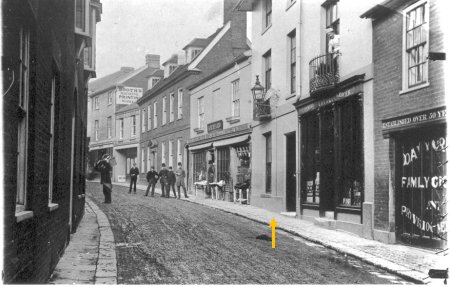
The entrance to Church Street looks much the same today as it did when this photograph was taken in about 1900.

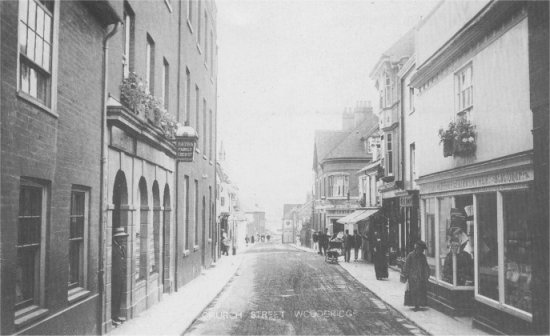
In 1560 Church Street was called Le Churchgate Street. After the street was paved with stones in about 1606 its name was changed to Stone Street.

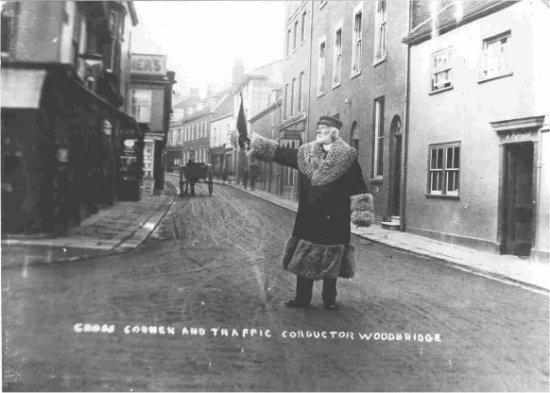
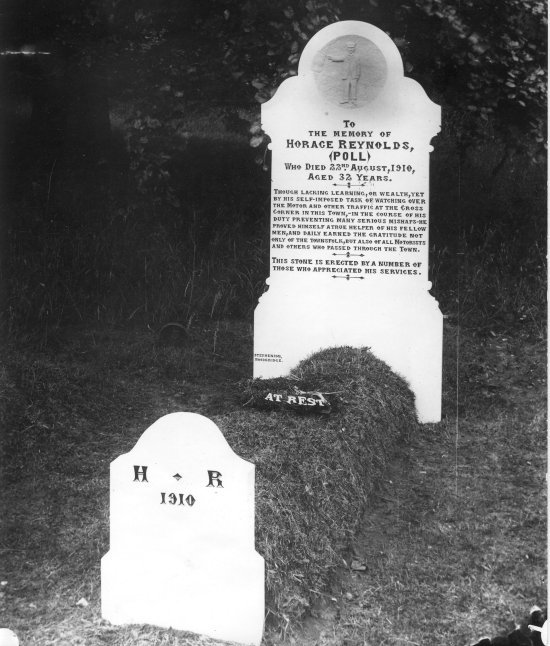
By 1900 the car and horse drawn traffic at Cross corner made it a congestion black spot. The problem was so acute that the barge hand, Horace Reynolds, or “Poll” as he was more familiarly known, took it upon himself to become the first Woodbridge Traffic Director. Starting his self-appointed task of sorting out the traffic in December 1907, “Poll” relied on tips from grateful road users to supply his daily needs. Lord Rendlesham, seeing the advantages of the service, had the Traffic Director supplied with a red coat. Poll was very popular and when he died in 1910, aged 32, a large number of townspeople attended his funeral.

This photograph shows the view looking the entrance to Church Street towards the riverside.

The entrance to Davy Crowe’s yard now leads into Stone Place. (So named after Stone Street, one of the earlier names of Church Street.)

The yellow arrow shows where an arched passage way was created to provide access to sizable courtyard at the rear.

In 1982 the shop on the right became part of a residential development called Carmelite Place.

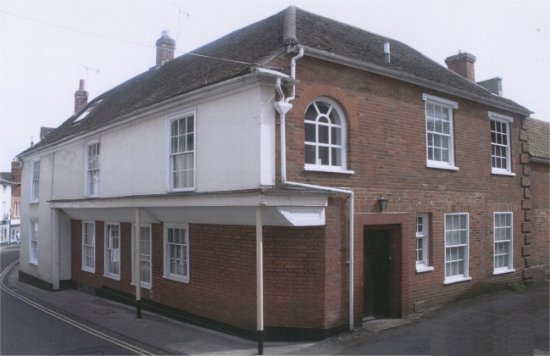
In September 1921 nine sisters of the Carmelite Order established a community in Stone House, Church Street. The community grew rapidly and in 1925 they bought properties in Church Street on either side of the original house. In 1938 they moved to Rushmere to subsequently to Quidenham near Attleborough in Norfolk.

This photograph shows Carmelite Place. The doorway on the left of the building had a turned wheel which made it possible to pass items to and from the building without having to have any contact with the nuns.

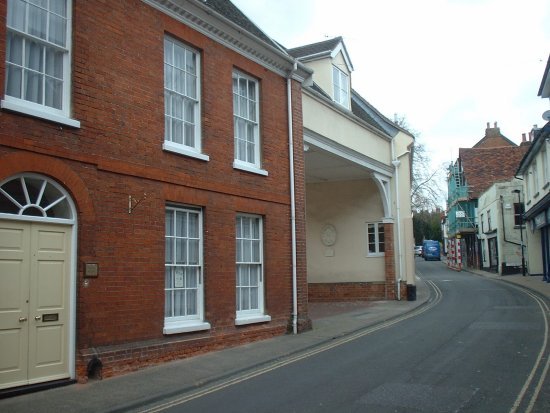
This entrance way was created after the nuns had moved to Rushmere. It enabled a number of houses to be built within the former courtyard.

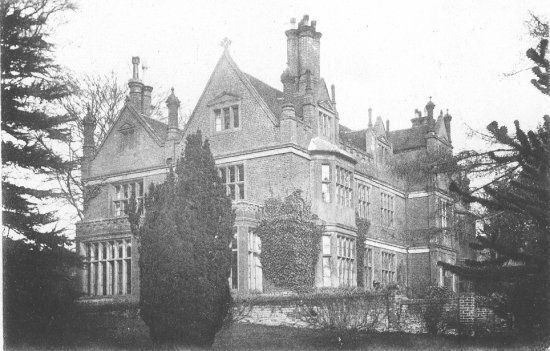
Thomas Seckford purchased the manor of Woodbridge late Priory in 1560. Shortly after he built the house called ‘The Abbey’ on or near the site of the former priory and created “an enclosed park”. Access to the Abbey was via an entrance at the top of Church Street.
In 1575 he obtained a licence from the Queen to found almshouses for the constant residence of thirteen poor men. They were to be accommodated in seven tenements he had just built on northern side of Le Fishpond Street. Seckford ordained that the 13 almsmen would have use of a nearby garden of about 3 acres and of a fountain or well in his “newly enclosed park in Woodbridge”. It is probably because of the fountain or well that Le Fishpond Street was being called Well Street by 1587.

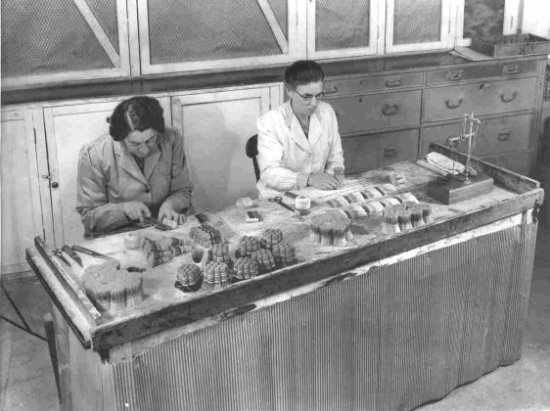
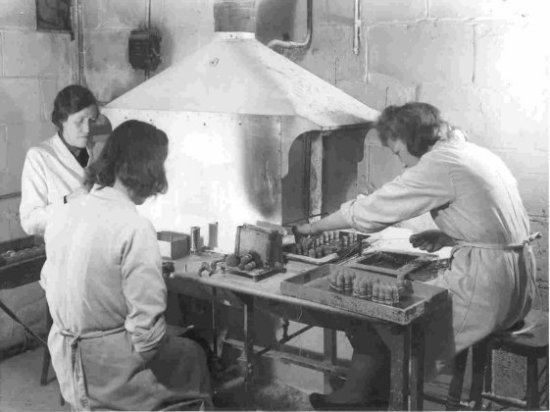
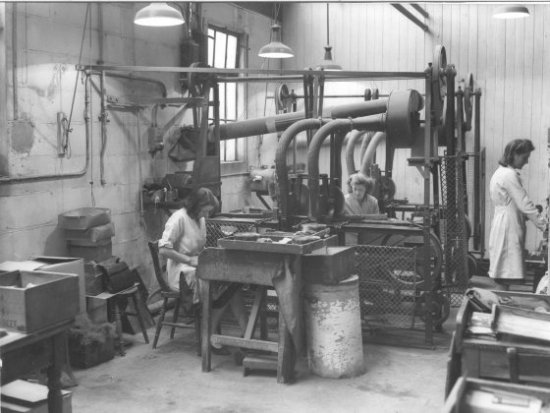
In 1947 Culmark, the shaving brush company, opened a factory in new Turn Lane on part of the site previously occupied by the Carmelite convent.

Culmark’s shaving brushes were of the highest quality and would last a lifetime. They were regularly given as a 21st birthday present.

Culmark ceased trading in 1975. The site was subsequently used as a printing works until 2003. There are now plans to build housing on the site.

This photograph shows the first part of the production line during which the bristles of each brush are set.

Bonding the bristles.

Finishing off.

The first references to converts to the Quaker way of life and worship in south east Suffolk are from 1655. In that year George Whitehead and other Quaker evangelists, the ‘First publishers of Truth’, arrived in Suffolk and held meetings across the county. The first Woodbridge converts would have met together for worship and discussion in their own houses, not only in Woodbridge but also in some of the surrounding villages.

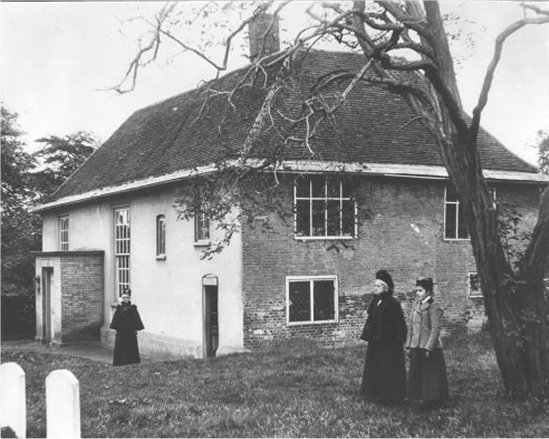
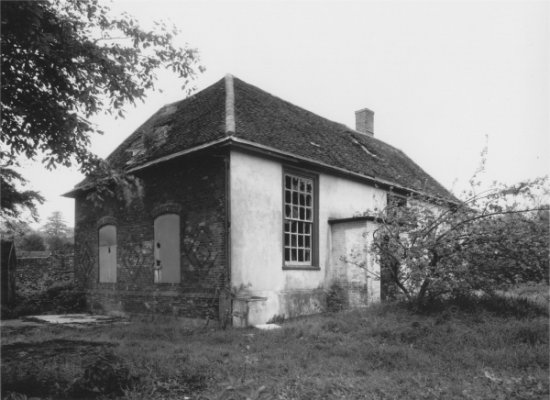
The Meeting House in Woodbridge was built in Turn Lane during 1678. This was some 6 years after Charles II had proclaimed an indulgence which enabled dissenting preachers and preaching places to be licensed and by then persecution of Dissenters was on the rise again. In December 1678, the Justices of the Peace issued an order to the Constables of Woodbridge complaining of ‘this Meeting House newly built near the Church’. Should five persons or more, of age of sixteen and upward, attempt to meet there the Constables were to ‘charge and command them peaceably to disperse and depart forthwith to their several homes and abodes, and not break His Majesty’s peace by meeting in such an unlawful manner’.

When the Toleration Act was passed 1689 the Quakers were able to worship in the way they wanted but this did not swell their numbers in Woodbridge or nationally. Between 1680 and 1800, the numbers of Quakers in Woodbridge fell by a half, with a further reduction of one third by 1860. In 1935 the Woodbridge Monthly Meeting regretfully came to the conclusion ‘that the time has come to close the meeting at Woodbridge where no regular Meeting for worship has been held for some time and where there are now only two members’.

The Quaker Meeting House on Turn Lane was sold in 1937 and for a time was used as a warehouse for a shop on Church Street. In 1971 it was converted it into a residential dwelling. The burial ground remains as a place for quiet contemplation and is leased to Woodbridge Town Council.

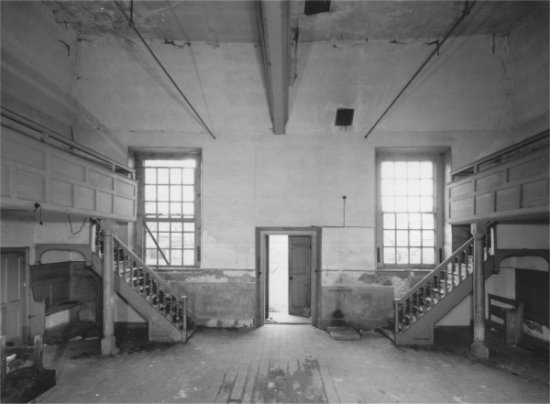
What was left of the interior of the Quaker Meeting House.

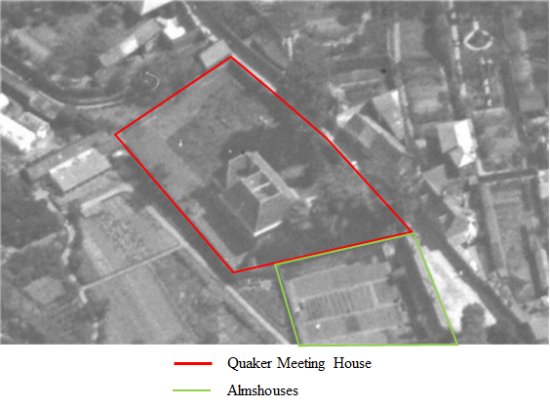
Aerial photograph interior of the Quaker Meeting House and the Burial Grounds.

Below the Meeting House and the Burial Grounds are three Almshouses.