Home > The Story of Woodbridge > Local Governance
Local Governance
The Role of the Parish Vestry
For many centuries most aspects of people’s lives were determined by the lord of the manor in which they lived. By the sixteenth century, however, people in towns and villages were increasingly working together to improve their living conditions.
During the sixteenth and seventeenth centuries successive Acts of Parliament made the parish vestry responsible for many functions which are now associated with central or local government. The vestry had previously been a purely ecclesiastical organisation which brought together parishioners to discuss church business. It was also able to levy a rate for improvements and so it was a logical step for Parliament to require it to impose a rate for social purposes. The vestries were initially made responsible for the management of the highways and subsequently for the dealing with the poor, enforcing the law, organising defences against fire and for local militia. Various parish officers were required for these tasks and their service was often compulsory and unpaid.
The period from the mid sixteenth century until second half of the nineteenth century was the heyday of local government at the parish level. The state’s main responsibilities were to conduct foreign policy and to defend the realm. There were no state departments to oversee the implementation of the Parliamentary Acts so all matters of governance, which impinged on the lives of ordinary people, were the responsibility of local people.
Dealing with the poor was by far the most onerous, and most expensive, task that parishes had to perform. From the outset the overriding principle was that the costs of providing relief for the poor should be defrayed out of local taxes gathered by local officials from the inhabitants of the parish in which the expenses had been incurred.
By the start of the sixteenth century enclosures and an increase in sheep farming had left many families without land or an income. They faced the prospect of either starving, begging in their local community or joining the bands of vagrants who were wandering the country in search of a living. Most of the vagrants were passive individuals who were just a nuisance to the people they begged from but the pervading view was that they belonged to organised criminal gangs. This thinking was reflected in much of the early legislation passed from 1495 to 1572. The features which worked best were eventually enshrined in the Poor Law Acts of 1597 and 1601. The procedures and institutions established by these Acts remained in place for just over two hundred years.
To help the deserving poor parishes provided out-relief to those who could continue to live in their own homes and in-relief in workhouses to those who could not. Care for the aged, orphans, widows and the sick could be provided in institutions which became known as hospitals. Pauper children were to be apprenticed and the undeserving poor, usually vagrants from other parishes, were to be punished in a house of correction.
The money required to provide these services had to be raised by levying a Poor Rate on everybody who occupied land and the amount paid depended on the annual rental value of the land. The poor rate was set by the two Overseers of the Poor who were appointed annually by each vestry. Justices of the peace were made responsible for ensuring that the vestries carried out the duties assigned to them.

There are few details of collections for the poor in Woodbridge during the sixteenth century but in the 1580s the Court Rolls of the manor of Woodbridge late Priory refer to houses which had been given to the town for the relief of the poor. The houses are later referred to the poors’ houses or the town’s houses. In many cases the town was not given money to maintain these houses so they fell into disrepair and some had to be sold.
The earliest reference to a house of correction in Woodbridge is in the Court Rolls for 1587. It appears to have been in what is now the house at 93, New Street. From other references it seems that the workhouse was also established in the same building.
After the battle of Sole Bay in May 1672 Woodbridge was forced to take some of the large number of Dutch who had been captured. To do so the churchwardens decided to enlarge the house of correction on New Street and to create a separate workhouse.
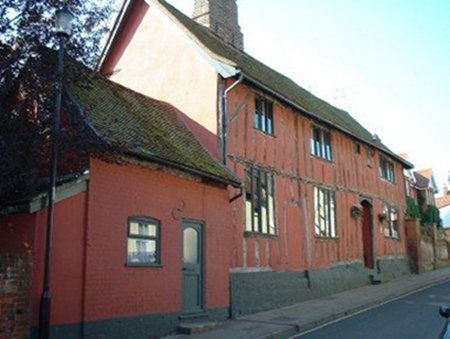
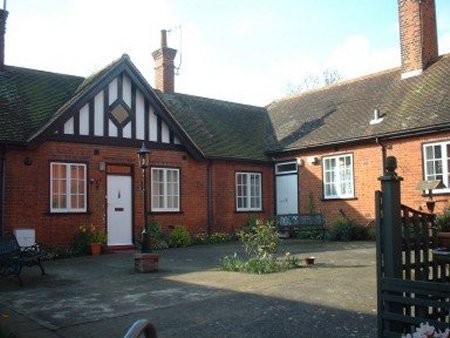
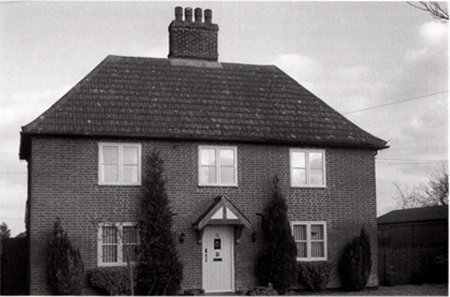
The New Street house of correction closed in 1804 and the building was converted into a hospital for the frail poor. It was divided up into many apartments where the poor lived rent free. In the 1960s it was sold and became a private residence. The money raised was used to a form a Trust which looks after almshouses which were built, in 1908, at the back of the former house of correction.
Charitable Bequests to Help the Poor
Gifts of land
During the reign of Henry VII, John Dodd gave 51 acres of land in the parish of Martlesham “for the maintenance of the poor and the benefit of the town”. A second bequest of land in Martlesham was made in by Jeffery Pitman in 1687 when he gave 9 acres of copyhold land for the “reparations and maintenance of the church (in Woodbridge) and members there of”. By 1844 these lands were being let for £56 a year, out of which £10 was contributed towards the support of the free school and the remainder was applied in the service of the church.
In 1637 John Sayer left just over 15 acres of land in Melton, in trust, so than “the rents thereof should be applied to providing a weekly dole of 15 two-penny loaves and a yearly distribution of clothing among the poor of Woodbridge. The land was partly copyhold and in 1855 it was let for about £30 a year, which was distributed by the church wardens in bread, of which 42 threepenny loaves are given every Sunday among the aged poor attending the church.”
In 1660 the churchwardens and principle parishioners let the 11 acre town common, which had been used from time immemorial by the parishioners, on a 999 year lease and 10s annual rental. In 1823 the newly formed Charity Commission decided to investigate how the title to the town common had been transferred to the churchwardens or inhabitants of Woodbridge. The Commission eventually ruled that, because it was unable to ascertain how the title to the common had accrued to the churchwardens or inhabitants of Woodbridge, it could not challenge the 999 year lease granted to Edward Mundy by the then churchwardens (Messers John Mundy and Francis Willard). In 1823 this property, generally known as Lime Kiln Quay, encompassed a dockyard, shipyard and Quay. By 1844 the then leaseholder obtained an annual income of £400 from property of and he paid 12s 6d to the town.
A yearly rent charge of 40s, left by Alice Osbourn in 1677, out of her messuage (house with garden) called the Malting Office, was distributed among the poor parishioners in coals.
In 1781, John Rutland charged his estate at Hasketon with a yearly payment to the Congregational Meeting House in Woodbridge, to be laid out in three gowns for three poor widows in the parish on 2nd of April.
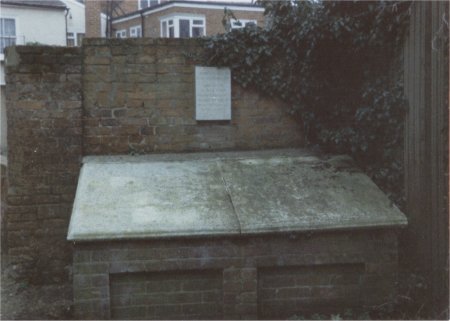
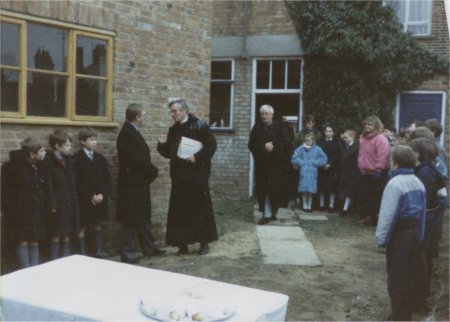
On Candlemas Day (2nd Feb) a distribution of bread to the poor was made out of the yearly rent charge of 20s from a house left by George Carlow in 1738. He was a member of a Christian Sect called the Separate Congregation who kept the Sabbath on a Saturday. His house on New Street was adjacent to the Bull Hotel. George Carlow was a member of a Christian Sect called the Separate Congregation who kept the Sabbath on a Saturday. Rather than be buried is a churchyard he had a tomb built in his garden. His house was eventually demolished when the Bull Hotel was expanded but access to the tomb was still allowed. It is from there that the bread was distributed until the access to tomb was now longer allowed by the current owner.
Gifts of Houses
Some of the wealthier people in Woodbridge chose to make gifts of houses “for the use of the poor for ever”. Such houses became known as variously as the Town’s Houses, Poor’s-houses or Poor Houses and they were used to provide accommodation for the poor. Unfortunately many of the donors were not so forthcoming with funds to keep these properties in repair and they fell into disrepair and eventually had to be sold.
In 1837 the Charity Commissioners produced a report described the Parishes Poor’s Houses. The relevant section is reproduced on the right. (Each property listed has a 1840 Tithe Map number. Using this number you will be able to locate the property using the maps in the Area Histories Section.)
A house in Pound Street given by William Bearman in 1668 for the use of the poor. It is used as the parish workhouse. (1840 Tithe Map number 510)
Two houses with a garden adjoining, belonging to the parish, which were used as pest houses and are now inhabited by paupers. (1840 Tithe Map number 56)
A house in the New-street called the hospital, and formerly used as a Bridewell. Purchased by the inhabitants of Woodbridge in 1641. (1840 Tithe Map number 408)
Two houses in Turn Lane, one given by William Smith, in 1601, the other by Jeffery Pitman, in 1608, for the use of the poor, and which are occupied in six tenements by poor families, rent free. (1840 Tithe Map numbers 454 and 457)
Two houses in the Thoroughfare (now Cumberland Street), also given by William Bearman, in 1661, for the use of the poor, and which are occupied rent-free by poor persons. (180 Tithe Map numbers 210)
A piece of ground belonging to and adjoining the house given by William Smith, which is held by Thomas Wade at a rent or acknowledgement of 2s/6d a year, and a stable and other buildings have been erected thereon; and there is also a piece of ground belonging to the houses in Thoroughfare-street, part of which, containing about 21 perches, is used by the occupiers of the house as a garden, and the remainder, containing 1 Rod, 12 perches, is held by the Rev. John Clarke, under a lease for 61 years from 1766, at the yearly rent of £2/2s. The rent is perhaps almost a fair equivalent for the ground as it is at present used, but the ground might possibly be rendered of great value if it were let for building upon. (1840 Tithe Map umber 197)
The rents of these pieces of land used to be carried by the churchwardens to their general account, but since 1824 they have been paid to the overseers of the poor, towards the liquidation of a sum advanced out of the poor-rates, for defraying the expenses attending the appointment of new feoffes or trustees of the poor’s premises, or some part thereof and subject to the payment of this charge, it appears to us, that the rents are applicable to the maintenance of the buildings, and the use of the poor.
In 1960 the Poor’s Houses Charity was set up. This Charity was endowed with various buildings and properties which had been given to the town to help care for the poor. When the Poor’s Houses Charity was registered with the Charity Commission in 1963 its revenue was obtained from:-
- The almshouses built in the yard of the Hospital
- The hospital, New Street
- Numbers 74 & 76 Grundisburgh Road (the Pest Houses)
- Land having frontages to Cumberland Street and Station Road known as the Old Surveyors Yard.
- Land having a frontage to Cumberland Street on which formerly stood the Old Poor Houses
- Land having a frontage to Cumberland Street with the old Fire Station thereon
The Charity also had some £1743 of investments of which £157 was designated as Bearman’s Gift.
In 1964 the Poor’s Houses Charity sold four of the properties by public auction. These were the hospital on New Street, the two Pest Houses and the land on which the Fire Station had been built in 1853. The proceeds of the sale was used by the Poor’s Houses Charity by combining the 7 units in almshouses to 5.
The Trust retained the rest of the land in Cumberland Street. This land was by then rented to the National Health Service who erected a number of single storey buildings on the site to form a clinic. This land was eventually sold for housing development in 1996.
The proceeds from the sale of these assets were used to modernise the New Street almshouses. They now consist of two units having a single bedroom and a unit, with two bedrooms, which is fully wheelchair accessible. One of the original external earth closets has been conserved for historical interest.
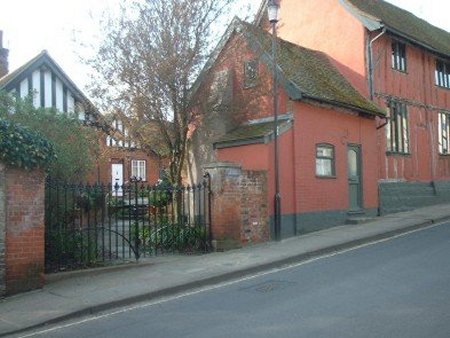
The courtyard of the New Street Almshouses.
The New Parish Workhouse
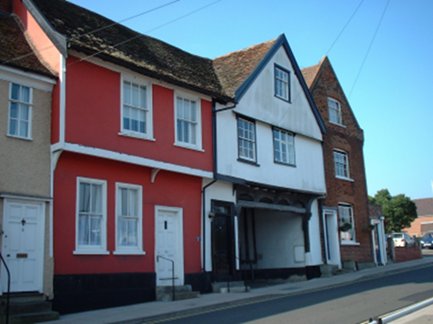
In 1672 the new workhouse was established in what is now 11, Theatre Street. This building had been bequeathed, in 1669, “towards the relief of the poor of Woodbridge”.
Some of the poor rate returns for the 1756 to 1807 have survived. In 1756 there were 437 families listed on the return. Of these 55 (12.5%) were excused payment because they were too poor. A similar percentage is found in all the poor rate returns which survived from the 1756 to 1807.
By 1756 Woodbridge’s workhouse on Theatre Street had some 24 beds and the inmates were set to work spinning wool on 21 spinning wheels. In 1770 there was a full time Governor living in the building and the number of beds had increased to 37. The records for the period are incomplete but, from 1756 to 1768, there were on average 32 people being given varying amounts of out-relief and 20 people in the workhouse. The expenditure on out-relief and in-relief was comparable and the money made from spinning wool in the workhouse was about 15% of the expenditure on in-relief.
The Creation of the Poor Law Unions in 1834
By the 1760s it was clear that the number of paupers across the county was increasing and the government responded by encouraging parishes in each hundred to join together and build a communal workhouse. The one for this area was built at Melton but both Woodbridge and Wickham Market did not want anything to do with it. This proved to be a sensible decision. The hundred’s workhouse at Melton was poorly managed and repeatedly ran into financial problems. It was eventually wound up in 1826 and, by 1829, the buildings had been converted to the Suffolk County Asylum– later to be renamed St Audry’s.
In most other areas the hundred’s workhouses were a success and many parish workhouses were closed. Nevertheless the cost of poor relief continued to rise because the number of people receiving out-relief was increasing.
By 1832 the government had decided that the time was ripe for a root-and-branch reform of the poor laws. A Royal Commission was appointed and its report concluded that the most effective means of reducing the poor rates was to make it much less attractive for the able-bodied to apply for poor relief. To this end it was proposed that all able-bodied applicants for poor relief would have to enter a workhouse where they had to perform a variety of irksome tasks. By this means, the commissioners argued, rate-aided poor relief would become so repellent an option for the able-bodied poor that they would be bound to embrace self-reliance as the alternative.
Most of the recommendations of the Royal Commission were enshrined in the Poor Law Amendment Act of 1834. Parishes in rural areas were required to join together into Poor Law Unions in order to provide a unified method of coping with the Poor. The authority which ruled over a Union was called the Board of Guardians. The Justices of the Peace in the district were made Guardians ex officio. The rest of the Board was elected by rate payers.
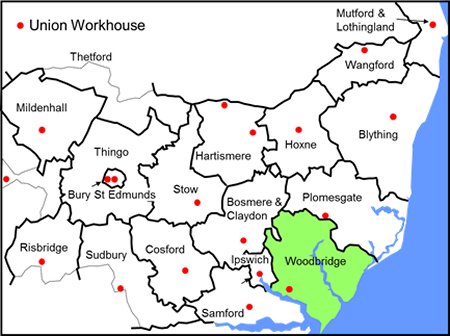
Within a year of the passing of the Poor Law Amendment Act seventeen Unions had been set up across Suffolk. The boundaries of these unions are shown by this map as are the locations of the workhouses. In most cases the old divisions of hundreds were ignored in setting these boundaries and, in some cases, county boundaries were ignored as well. The Woodbridge Poor Law Union, which is shaded green on the map, comprised some 47 parishes and it used the existing workhouse at Nacton. This had been built by the parishes of Colneis and Carlford in 1756. In terms of population Woodbridge was by far the biggest parish in the Union. It had about 20% of the population.x
After the inmates of the Woodbridge’s parish workhouse had been transferred to Nacton the premises were used as the boardroom of the Guardians of the Woodbridge Poor Law Union. In 1844 part of the building was hired out as an infant school and in 1867 the whole building was sold by order of the Charity Commission.
Despite the creation of the Poor Law Unions, each parish still had to pay the full costs of caring for the poor of that parish. To do so each parish had to base its poor rate on the average cost of providing relief to its poor over the previous 3 years. There was no equalizing mechanism whereby rich parishes contributed to costs of the poorer parishes. It was not until 1865, with the passing of the Union Chargeability Act, that it became possible for the financial burden of pauperism within a Union to be spread evenly across all the parishes in a Union.
The Poor Rate in Woodbridge
In all parishes, the Poor Rate was initially collected to cover a parish’s expenditure on caring for its poor. Later it was also used to pay for maintaining highways and to provide street lighting. The Poor rate also include each parish’s contribution to the county Rate.
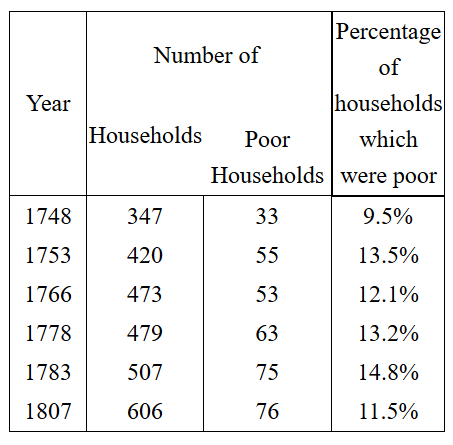
The Woodbridge Town Books and the Oversees Account Books held by the Suffolk Record Office give a comprehensive description of how the poor rate was collected up to the creation of the Poor Law Unions in 1834. The Poor Rate, paid by each household, was based on a valuation of the amount the land they occupied. During the mid-eighteenth century the poor rate was the average poor rate was 6d in the £ of the rateable value.
The rateable value of each household is listed in the Woodbridge Town Books and those judged to be too poor to pay the poor rate are identified.
The table to the left shows that from 1748 to 1807 the percentage of households considered to be too poor to pay the rate are identified. The Table on the right shows that from 1748 to 1807 the percentage of household considered to be too poor to pay the rate varied 9.5% to 14.8%.
During 1835, the last year that the parish workhouse was in use, the total expenditure on in-relief and out relief was £2,655. When the Woodbridge Poor law Union took over the responsibility for caring for the poor there was an immediate cost saving and this continued to grow. By 1859 the cost of caring for the poor was only 49% of that in 1835.
The ratio of the expenditure on in-relief and on out-relief varied considerably from parish. In 1863, for example, 28% of the money Woodbridge paid to the Poor Law Union was used for in-relief whereas across the whole of the union the average was only 19%.
The finances of the Union were tightly controlled. The amount that each parish paid per year was set at the average of the last three years expenditure on both kind of relief. Any over or underpayments over the year were carried forward to the next year. The collection of poor rates from each parish was the responsibility of the Overseer in each parish and the Church Wardens.
The End of the Workhouses and the Creation of the Welfare State
The Unemployment Assistance Board was set up in 1934 to deal with those not covered by the earlier 1911 National Insurance Act passed by the Liberals and, by 1937, the able-bodied poor had been absorbed into this scheme.
The depression from 1929 to 1939 resulted in the expenditure on unemployment benefit becoming unsustainable and it had to be reduced by 10%. It was the terrible poverty and unemployment during this decade which persuaded many reformers that an insurance scheme was needed to cover the whole population and which would provide all citizens with security from want “from the cradle to the grave”. The result was The National Health Service Act of 1946 and the National Assistance Act of 1948. These Acts, sometimes referred to as the ‘Social Security Acts’ made adequate provision for all the groups which had previously relied on the Poor Law.
Organizing Defences against Fire
The churchwardens’ accounts for 1626 record the purchase of 16 leather buckets. In a schedule of “church goods” for the same period there is a mention of “two fire hooks and a long ladder”. In the eighteenth century two manual engines, the “Great Engine” and the Little Engine”, were obtained and stored at the base of the church tower under the care of the Sexton, John Fosdike. In 1817 the base of the tower was included in the main body of the church and the engines, pumps, buckets and ladders were transferred to the then open ground floor of the Shire Hall.
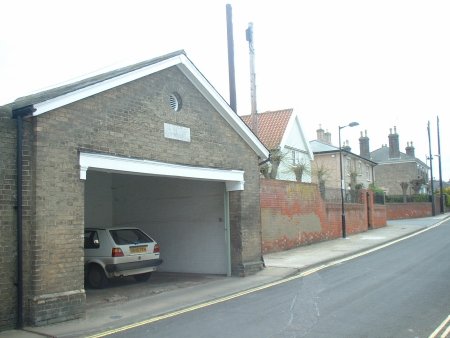
In about 1847 one of the old fire engines was sold and replaced. In 1853 several of the prominent inhabitants resolved to build an engine station by public subscription. This modest building was subsequently erected in Cumberland Street and a brigade was formed of 10 “working men” from the town.
In 1873 there was public concern about the way a large farm fire had been handled and, as a result, a new brigade the “Woodbridge Volunteer Fire Brigade” was formed. The new brigade still depended on volunteers but this time they were drawn from tradesmen of the town. Each of them was provided with a uniform, helmet, and payment for call out and practices.
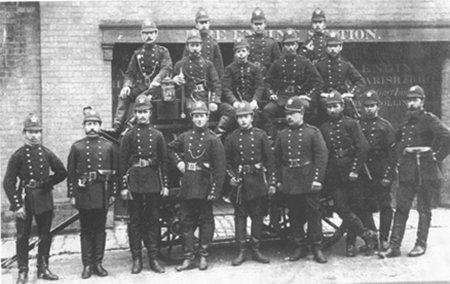
other photographs of the Fire Engine Station and the Fire Engines
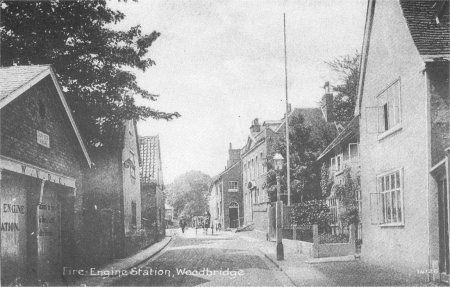
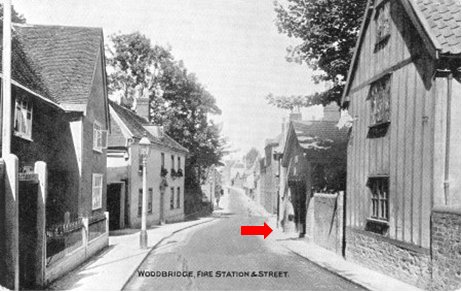
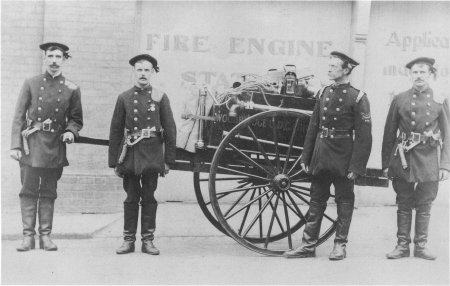
Public Health
There was almost a threefold increase in the population of England during the period 1750 to 1850. Most of the increase was in urban centres and the health of those living in them became progressively worse. It was left to the local communities to find the best ways of minimising the problem and to raise the necessary funds. In Woodbridge, for example, two “Pest Houses” were built near the parish boundary on the Grundisburgh Road in 1755. When an inhabitant of the town showed signs of small pox, or another contagious disease, they were removed to these houses. The money needed to build them was raised by asking townspeople to contribute what they could afford.
Edwin Chadwick, one of the architects of the 1834 Poor Law Act realized that a significant percentage of the poor relief was given to the families of men who had died from infectious diseases. He thus concluded that money spent on improving public health would be cost effective as it would save money in the long term. The Health of the Towns Act of 1846 and the 1848 Public Health Act led to the formation of Local Boards to deal with sanitation, water supply, public parks, baths, fire hazards and to appoint a medical officer. Many of the larger parishes were already addressing some of these services so the Acts merely formalized their efforts. As was the case with poor relief, the costs of providing these services was to be raised by taxes set and collected locally.
There were Local Boards of Health for large urban centres and for populous parishes such as Woodbridge. Members of these boards were elected by owners of property and by rate payers. Parishes in rural areas were encouraged to join together and create Rural Local Boards to perform the functions required.
The Woodbridge Local Board of Health
The biggest problem that most Local Boards faced was how to cope with the disposal of the human faeces (excrement) which built up in the primitive outdoor toilets, the privies, that most urban dwellers used. The commonest way of disposing of this smelly material was to have it collected at night. The men who did the work were euphemistically called the night soil men and their cart was referred to as the violet cart.
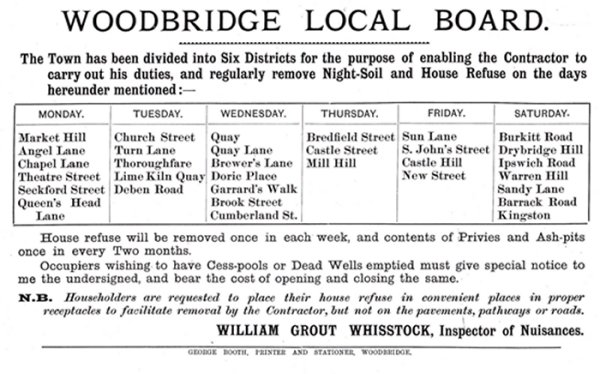
The undated notice below shows how the Woodbridge Local Board organized the collection of night soil and house refuse (predominantly ash from fires). Everything else which was disposed of could be recycled and thus had a value. It would have been collected by rag and bone men.
The night-soil men and their violet cart emptied the town’s privies.

The Public Health Act of 1872 transferred the responsibilities of the Local Boards of Health to the newly created Urban Sanitary District and Rural Sanitary District authorities. Three years later another Act gave these authorities wider powers of enforcement in relation to drainage, sanitation and water supplies. It also required the authorities to appoint health inspectors.
By 1872 Woodbridge was covered by an Urban Sanitary District and the rest of the Woodbridge Poor Law Union was a Rural Sanitary District. The immediate impact on life in Woodridge was not as great as in the big towns and cities. It was not until 1902 that the inhabitants of Woodbridge were freed from the chore of obtaining their water from wells via buckets or hand pumps. They had to wait even longer for a modern sewerage system. The night soil men and their violet cart were needed to keep Woodbridge smelling sweet until a comprehensive sewerage system was completed in 1965.
Article on improvements to the towns water supply
For centuries the people of Woodbridge obtain fresh water from wells sunk into the crag layer. The larger houses would have their own wells but the cottagers would have used a communal well which was often some distance away. Rain water, collected in a water butt, was prized for its softness and would be saved for cosmetic functions, i.e. shaving, hair washing and the delicate skin of babies. By the start of the 19th century water was still being drawn up from wells in buckets although, by then, the richer houses had a hand pump. Over the next twenty years large towns were provided with conduits and cast iron pipes to distribute water from springs or reservoirs, but Woodbridge had to wait until 1902 before it was freed from the chore of obtaining its water from wells via buckets or hand pumps.
The progress made in 1902 and 1903 in providing the new water supply is recorded in Lambert’s Almanack. The relevant entries are reproduced here:
1902 The question of a better water supply is now within reach of being accomplished, and will be a great boon. The Woodbridge District Waterworks Company has been incorporated by special Act of Parliament, and at the first statutory meeting, held on 30th September, it was stated that out of the issue of £12,500 capital, all had been subscribed except £500. The registered list comprised 147 shareholders, the great majority of whom are residents of the town. Land has been purchased in Brook Street and Mill Hills, and the work of sinking a well on the Brook Street site has been already started. It is expected that by January 1903 the town will be in receipt of water from the waterworks.
1903 The Waterworks Company have completed their various works, and by the time our readers will be perusing these pages they doubtless will be supplying their customers with water. The pumping station has been built on land on the Bredfield Road after the failure to secure a supply on their property in Brook Street. The test of the water was, from all points of view favourable, Dr. Stevenson recommending for a public supply.
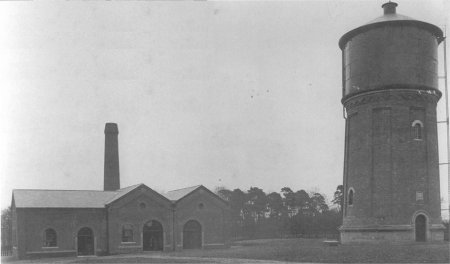
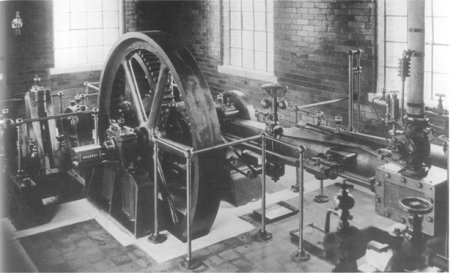
The pumping station and bore-hole were adjacent to the present water tower on Bredfield Road. The bore-hole obtained its water from the chalk layer some 140 ft down. (The numerous wells in Woodbridge would not have been so deep. They would have been sunk into the crag layer.) Water from the bore-hole was pumped up by a steam engine housed in the one storey brick built building that is behind what was then manager’s house adjacent to the entrance on Bredfield Road. This house (20, Bredfield Road) is now a private residence but the engine house remains, albeit without its chimney.
By 1950 the output of the Bredfield Road water works had been increased by sinking two 140 ft bore holes into the chalk and three wells into the crag. Each well was equipped with a separate pump. A 100,000 gallon water tower had been erected and there was a new pump building. The old buildings were retained for storage. Water delivered to customers was about equal parts of crag and chalk water. There were ‘Candy’ pressure filters to remove iron but there was no attempt to soften the water which was classified as ‘very hard’. (Softening of the water was contemplated at various times but was not put into operation because of the cost of installing and maintaining the necessary plant.)
By 1967 Woodbridge’s water was the responsibility of the Ipswich Corporation Water undertaking. Water was still distributed from the Bredfield Road site but this was now one of five pumping stations feeding a ring main that linked Ipswich, Woodbridge, Pettistree, Raydon and Stowmarket.
In 1995 the bore holes and wells at Bredfield Road were closed down because of concerns about the high levels of nitrates in the water, but the site remains as the distribution point and treatment works for Woodbridge.
Article on the installation of a comprehensive sewerage system
Woodbridge did not have a comprehensive sewerage system until 1965. Before then most of the houses in the town would have had pail closets that would have been emptied weekly. Some of the larger houses would have had cesspools that probably overflowed into the land drains installed to carry away the surface water due to rain. Ipswich fared rather better – the main sewer there was installed in 1880.
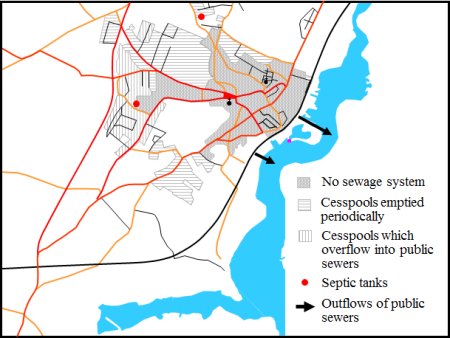
By the 1950 the main problem facing the Urban District Council was the provision of new housing and the lack of a satisfactory system of sewers and sewage disposal. Since 1939 the Council had undertaken the service of emptying pail closets (weekly) from the parts of the town developed before 1875. Other areas of the town were served by cesspools that were emptied periodically by the local authority. The more recent housing had discharged into large communal septic tanks. The scale of the problem is set out in the 1950 Annual report of the Sanitary Inspector.
In 1950 there were two main sewers, primarily for service water. Numerous branch sewers were connected to them and they carried overflows from septic tanks and cesspools as well as surface water.
- In the areas of the town which had been developed post 1850 there were 878 cesspools which were emptied each year, some requiring 3 or 4 loads, by two men.
- There were two areas on the west of the town which had been developed post 1940 where cesspools overflowed in public sewers.
- In the older area of the town a team of 3 men operated the night soil collection and disposal service and dealt with 1000 pails a week.
The map on the right shows the extent of each of these areas, the locations of septic tanks and the outflows of the public sewers.
Between 1950 and 1958 those parts of the two main sewers which existed as open ditches were piped or covered. Cesspools formally emptied periodically by the local authority were adapted to overflow into the new sewers.
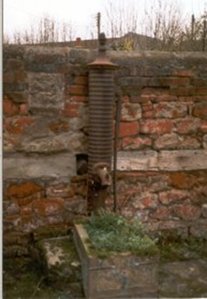
Until 1902 inhabitants of Woodbridge obtained their water from wells via buckets or from hand pumps like this one.
Upgrading the Sewerage System
In the early 1960 it was decided a more comprehensive system was needed to cope with any significant expansion of Woodbridge. Plans were drawn up but the Woodbridge Urban District Council decided that they could not afford it. Thus new house building in the town went ahead without the sewage system that was originally intended for it.
Work on implementing a revised scheme was started in 1963 and finished in 1965. The two main valley sewers augmented by two others, and the sewage works were built at Melton and Martlesham.
By 1965 most of the sewage from Woodbridge went through the sewage treatment works (Creek Farm) near Martlesham Creek. This was jointly operated with the Deben Rural District Council. At that time most of Woodbridge was drained by 4 main valley sewers that ran down from near the A12 to a pumping station just behind the pool for the Tide Mill. The area around the Duke of York corner (lower Kyson) had a separate sewer having a pumping station near Martlesham Creek. The area south east of the railway line was the only part of Woodbridge not connected to the main sewer. The only buildings in this area were the boat yards and their sewage was discharged untreated into the harbour.
Creek Farm was designed to serve a population of 16,000 (9,000 in the Rural District and 7,500 in Woodbridge) but extensions to the pumping station could increase to 23,000. At the time the works was built the population served was 14,000.
Parts of Melton and Parts of Woodbridge were also served by a pumping station and sewerage works in Melton which also had scope for expansion.
By 1966 it was clear that problems existed and further work was needed to increase the capacity of parts of the system. During bad weather the additional ground water flowing in the 4 valley sewers was overloading the pumping station and untreated sewage had to be discharged into the river from five overflow chambers on the connecting sewer that joined up the four valley sewers. Furthermore certain manholes were overflowing at times. These manholes were on the sewers carrying the water from the Naverne Brook along Castle Street and the overflow of the Pond in the Abbey fields (i.e. near Steynings Brook). The cure to these problems was to increase the pumping capacity for the valley sewers and to increase the size of some of the pipes.
In 2007 storm tanks were sunk on Quayside and behind the Community Hall. Then in 2009 another was added on Brook Street.
The End of the Workhouses and the Creation of the Welfare State
Towards the end of the nineteenth century it was becoming clear that the piecemeal system which had developed in response to the vastly increased need for local administration could no longer cope. Many of the Sanitary Districts were run by unpaid officials and there was often no one who could be held responsible for the failure to undertake the required duties. The first step towards creating a standard system of local government was the passing of the 1888 Local Government Act which created 66 County Councils. Each was run by councillors, elected by ratepayers every three years, and aldermen, elected by the councillors every six years.
The government made grants to these councils to cover some of their expenditure on police, main roads, sanitary officers and elementary education. These grants gradually increased to a level which ensured that the infrastructure of basic services in a given area was no longer dependent on the state of the economy in that area.
The 1894 Local Government Act created a second tier of local government. Henceforth, all administrative counties and county boroughs would be divided into either rural or urban districts, based upon the earlier sanitary districts, to enable a more localised administration. This Act created the Woodbridge Urban District Council and the Deben Rural District Council.
The Local Government Reorganization Act of 1972 set up a new system of local government. When this Act came into force in 1974, the Woodbridge Urban District Council became the Woodbridge Town Council and the Deben Rural District Council was incorporated into the much larger Suffolk Coastal District Council which took over the Melton offices of the former Deben Rural District Council.